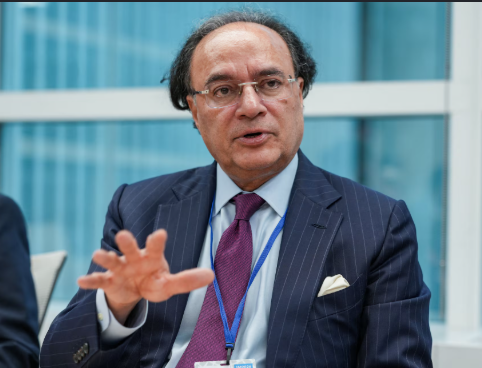
Pakistan’s economic growth and inflation could face fresh pressure from the ongoing US-Iran war, Finance Minister Muhammad Aurangzeb said on Monday, warning that rising tensions in the Middle East could complicate the country’s economic recovery.
Speaking at the “Partnerships That Power Progress” event hosted by EXIM Bank in Islamabad, Aurangzeb said Pakistan had moved beyond economic stabilization and was now focused on accelerating growth.
He said the economy was expected to grow by more than 4% during the current fiscal year, but acknowledged that the US-Iran war could affect both inflation and gross domestic product.
The comments came as tensions in the Middle East escalated further. US forces reportedly struck two Iranian launchers on Iran’s Larak Island on Sunday, while the war has also disrupted the Strait of Hormuz, one of the world’s most important energy routes. Before the war, the waterway carried roughly one-fifth of global oil supplies.
Aurangzeb said Pakistan’s challenge was now to ensure that economic growth remained sustainable rather than simply pursuing higher growth. He said the government was targeting an export-led and private sector-driven growth model, supported by measures introduced in the latest budget.
The finance minister said the government had lowered the super tax and removed advance tax measures to improve conditions for exporters. He added that exporters could now obtain financing at 4.5%, despite the policy rate being 11.5%, arguing that the cost of export financing was no longer a major competitiveness concern.
Aurangzeb said Pakistan Exim Bank would be important in providing export refinancing and long-term financing under facilities introduced in the budget.
He also stressed the need to broaden Pakistan’s export base by expanding the range of products and services, while targeting a wider mix of international markets.