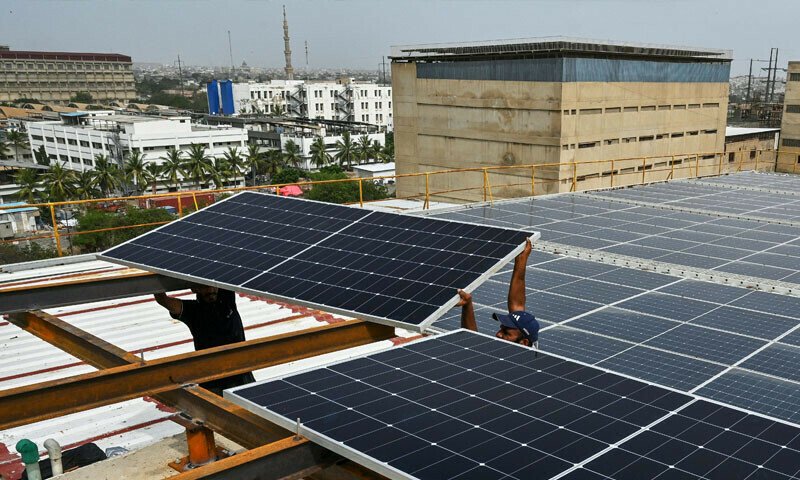
Pakistan’s dependence on imported fossil fuels has declined significantly as rooftop solar adoption accelerates across the country. According to a pre-budget report shared with ProPakistani by Renewables First, oil and LNG imports fell by around 40 percent between 2022 and 2024.
Rather than reducing overall electricity demand, Pakistan is increasingly meeting its energy needs through decentralized solar systems. This shift has enabled consumers to use electricity-intensive appliances, including air conditioners, more frequently.
The transition has been largely driven by a surge in low-cost solar panel imports from China, supported by Pakistan’s zero-rated tariff regime on solar equipment.
However, the government is currently considering a proposal to raise sales tax on solar panels from 10 percent to 18 percent. If implemented, the move could slow down or partially reverse recent gains in solar affordability.
The report estimates that Pakistan saved approximately $12 billion in LNG imports between 2021 and February 2026, with potential additional savings of $6.3 billion if current energy trends persist.
Installed solar capacity is projected to have reached around 53 gigawatts by March 2025, largely fueled by rooftop and distributed systems rather than centralized generation planning.
The study further notes that this shift has reduced exposure to currency depreciation, inflationary pressures, and external energy supply shocks, while offering cheaper electricity options for both households and businesses.
Despite continued vulnerability to regional risks, including disruptions through the Strait of Hormuz, the report concludes that Pakistan’s rapid solar expansion has already created a substantial buffer against import-related energy shocks.