




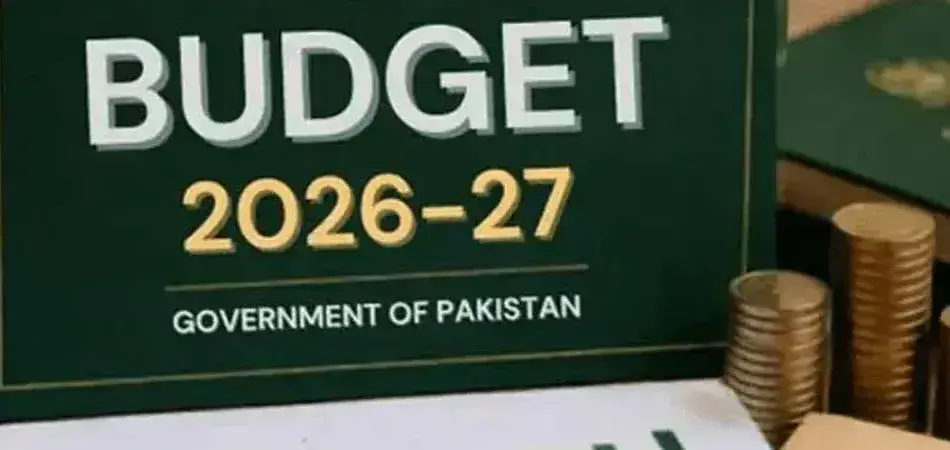
The revised Finance Bill for FY2026–27 has been approved after committee-level changes, introducing a mix of fiscal targets, tax reforms, sectoral allocations, and regulatory adjustments. The updated framework will take effect from July 1, 2026.
Overall Top Changes
| Area | Original Finance Bill | Standing Committee Version |
|---|---|---|
| Imported mobile phones | No facility to pay PTA/DIRBS tax in instalments | Individuals may be allowed to pay imported-phone tax in instalments, provided all instalments are cleared before the end of the financial year |
| Mobile phone tax rates | Existing Ninth Schedule rates were not revised | Rates are still not reduced or revised; only the instalment facility is added |
| Petroleum levy framework | Proposed detailed rules for petroleum and climate support levies, including reporting, recovery and late-payment surcharge | The entire proposed amendment package has been removed |
| Life insurance and takaful payouts | Tax exemption applied only after completing seven years | Exemption will apply after four years. The 10% tax will now cover payouts after one year but before four years |
| Social media income tax | 5% for resident persons on the ATL and 5% for non-residents | Rate table now simply states a flat 5%, removing the ATL/non-resident distinction from the rate wording |
| Section 6A fixed-tax regime | Tax became adjustable where turnover exceeded Rs. 200 million | Persons with turnover up to Rs. 200 million may also opt out through a final and irrevocable certificate for Tax Year 2027 |
| Failure to integrate with FBR | Up to 5% of expenditure could be disallowed | Disallowance reduced to 3% of expenditure |
| Export-oriented businesses | No corresponding exemption | Super tax under Section 4C will not apply where export proceeds exceed 80% of total turnover |
| Private equity and venture-capital funds | No new exemption in the original proposal | Income exemption introduced where at least 90% of accounting income is distributed, subject to conditions |
| Airline imports | Sales tax exemption was limited to PIA | Exemption extended to aircraft and parts imported or leased by any Pakistan-registered airline, effective July 1, 2027 |
| Coal imported for power producers | No special 1% minimum value-addition rate | Minimum value-addition tax fixed at 1% where imported coal is supplied directly and exclusively to IPPs |
| FBR sharing tax returns | FBR could share sectoral sales-tax return data among registered businesses under non-disclosure agreements | This proposed power has been removed |
| Customs penalty | Certain customs penalty proposed to rise from Rs. 500,000 to Rs. 10 million | Increase reduced to Rs. 5 million |
| Independent scrutiny committees | No provision for a chartered accountant as a member | Committees may co-opt a chartered accountant as a non-voting member; limitation periods are also protected during committee review |
| Appointment of external auditors | Taxpayer had no stated right to object to FBR’s first nominee | Taxpayer may object within 15 days; the commissioner may appoint another accountant or cost accountant |
Macroeconomic Targets and Fiscal Overview
- GDP growth target set at 4%, with inflation projected at 8.2%
- FBR revenue target fixed at Rs. 15,264 billion, reflecting a 17.6% increase
- Total federal expenditure stands at Rs. 18,771 billion, including Rs. 8,054 billion for debt servicing
- Defence budget raised to Rs. 3,000 billion
- PSDP set at Rs. 1,000 billion, while total development spending reaches Rs. 3,675 billion
Social Protection and Public Welfare
- BISP allocation increased to Rs. 838 billion, covering 12 million families and education support for 9.2 million children
- Apna Ghar housing scheme: Rs. 71 billion allocated
- Salaries of government employees increased by 7%, pensions by 7%, and minimum wage raised by 10%
Tax Relief and Revenue Measures
Significant adjustments have been introduced across income, business, and consumption taxes:
- Removal of 10% surcharge on salaried class and revised tax slabs
- Business tax relief including reduced super tax for high-income firms
- Property sector relief via reduced withholding taxes for filers
- IT exporters’ Final Tax Regime extended to 2029
- Exporters’ tax rate reduced from 2% to 1.25%
- Foreign card transaction tax cut from 5% to 0.5%
- Capital Value Tax on financial assets proposed for abolition
- Tax exemptions introduced for sanitary products and contraceptives
- Fixed tax scheme proposed for small retailers under Section 99B
FBR Digital Overhaul
A major restructuring of the tax administration system includes:
- Faceless assessment and algorithm-based tax processing
- Centralized data hub with third-party integration
- Real-time production and compliance monitoring
- Expanded use of digital and AI-driven systems
Development and Infrastructure Spending
Large-scale development remains a key focus:
- Water sector: Rs. 103.1 billion (Diamer-Bhasha, Mohmand, K-IV Karachi)
- Energy sector: Rs. 116.2 billion for clean and renewable projects
- Housing & urban development: Rs. 54.6 billion
- Health: Rs. 25.1 billion
- Higher education: Rs. 46 billion
- Infrastructure focus on roads, railways, water, energy, and urban transport
- Major projects include ML-1 (Karachi–Rohri), M-6, N-25, and Thar Coal connectivity
Industry, Trade, and Digital Economy
- EV incentives for motorcycles, rickshaws, cars, and buses
- Luxury EVs and high-end vehicles subject to Federal Excise Duty
- Customs reforms aimed at reducing input costs and boosting exports
- Continued privatization of PIA, banks, DISCOs, GENCOs, insurance firms, and hotels
- Expansion of cashless economy, AI policy, and digital public infrastructure
Key Committee-Level Revisions
Several important changes were introduced during final review:
Phone Imports
- No reduction in PTA tax rates
- New facility allows installment-based payment of mobile import taxes, to be cleared within the same fiscal year
Petroleum Levy
- Entire proposed framework for petroleum and climate levies removed
Insurance & Takaful
- Tax exemption now applies after 4 years instead of 7
- Adjusted withholding structure for early payouts
Airline Imports
- Tax exemption extended beyond PIA to all registered airlines from July 2027
Export & Business Relief
- Export-oriented firms with over 80% export turnover exempt from super tax
- Venture capital and private equity funds granted conditional tax exemption
Property, Social Media & Digital Tax
- Unified 5% tax on social media income
- Revised advance taxes on property transactions
- Adjustments to fixed-tax regimes and compliance rules
Sales Tax and Sector Adjustments
- Removal of proposed taxation on agro-chemicals (pesticides and related inputs)
- Digital POS-based compliance required for certain retail categories
- Refinements in manufacturing and retail definitions
- Added exemptions for wheat and rice bran
Automobile and EV Tax Structure Revised
- FED on luxury EVs now dollar-based:
- Up to $75,000: 0%
- $75,000–$110,000: 30%
- Above $110,000: 40%
- Sharp increase in duty on high-engine vehicles:
- 2,000–3,000cc: 86%
- Above 3,000cc: 92%
Final Outcome
The revised budget maintains core reforms while refining taxation, expanding social protection, boosting infrastructure investment, and restructuring FBR operations. While some proposed levies were withdrawn, key revenue and relief measures remain intact, shaping a more digitized and compliance-driven fiscal framework for FY2026–27.