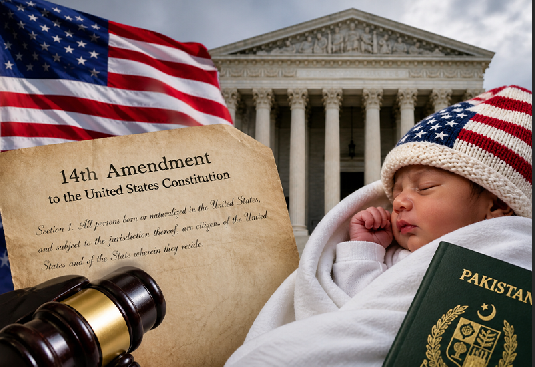
A new constitutional amendment introduced in the United States could significantly reshape long-standing rules on birthright citizenship, with potential implications for children born to Pakistani and other foreign nationals on US soil.
US Senator Rand Paul has put forward a proposal seeking to end the automatic granting of US citizenship to anyone born in the country, arguing that the current interpretation of the 14th Amendment has been stretched beyond its original intent. At present, US law generally grants citizenship to all individuals born in the United States, regardless of their parents’ immigration status.
Paul contends that this framework has been misused and says it does not reflect what the authors of the 14th Amendment intended. While he emphasized support for lawful immigration, he argued that the system has been weakened by irregular migration and “exploited” over time.
He also referenced stricter border enforcement efforts in recent years, crediting President Donald Trump with tightening immigration controls, but said further legal changes are necessary to address what he views as ongoing gaps in citizenship law.
The senator noted that he has long supported restrictions on birthright citizenship, including earlier legislative efforts dating back to 2011. His latest move takes the form of a constitutional amendment, which he argues would ensure clarity on citizenship rules even if courts do not interpret the issue as he believes they should.
The proposal is expected to trigger renewed political debate in Washington over immigration policy, constitutional rights, and who qualifies as a US citizen at birth.