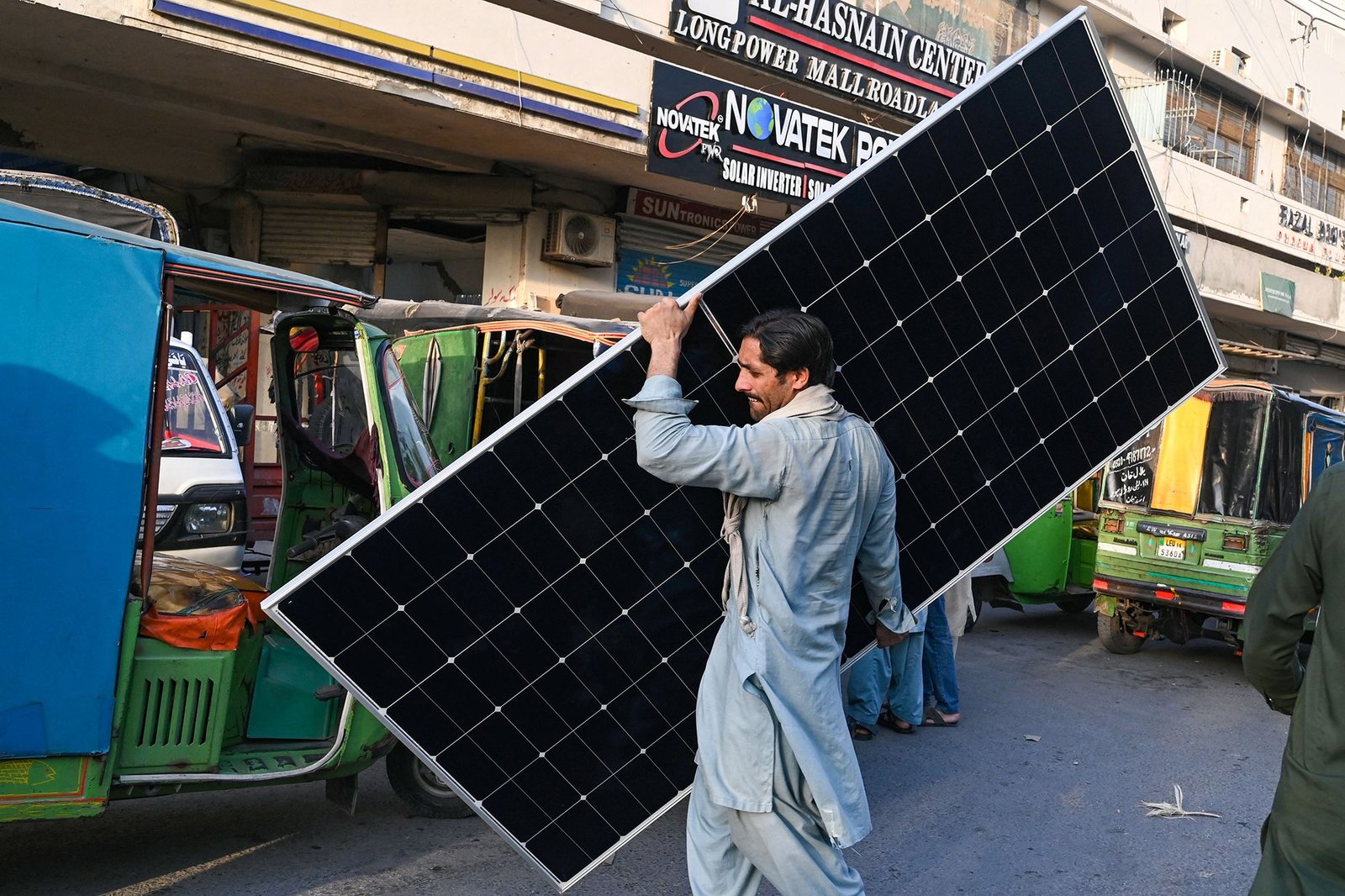
Pakistan’s next energy challenge is shifting from rapid rooftop solar adoption to building a domestic clean energy industry that creates jobs, attracts investment, and reduces reliance on imported technology, energy experts said at the conclusion of the Solar, Storage and Flexibility Conference in Islamabad on Thursday.
While Pakistan has emerged as one of the world’s fastest-growing consumer-led rooftop solar markets, most of the economic gains continue to benefit foreign manufacturers as the country remains heavily dependent on imported solar panels, batteries, inverters, and electric vehicles.
Experts said the next phase of the energy transition should prioritize local manufacturing, technology transfer, workforce development, research and innovation, and policy stability to encourage long-term private investment.
Andrew Chang, Chief Executive Officer of New Energy Nexus, said developing a competitive clean energy industry requires more than establishing factories.
“A successful industrial ecosystem starts with de-risking technology, building trust and investing in people. Before manufacturing can take root, products need to be widely adopted and competitive in the market. At the same time, countries must develop the talent pipeline and support entrepreneurs because they are the ones who ultimately deliver value to consumers,” he said.
The conference also highlighted Pakistan’s growing importance in the global clean energy transition. The Global Solar Council’s 300 Million Solar Homes campaign, launched with the Global Covenant of Mayors for Climate and Energy, aims to equip 300 million homes and small businesses worldwide with rooftop solar systems, supported by battery storage where needed, by 2030.
Pakistan was presented as one of the campaign’s strongest examples after importing more solar panels over the past two years than many countries installed over an entire decade. During the same period, residential electricity demand increased by 32 percent, largely driven by distributed solar generation.
Global Solar Council Chief Executive Officer Sonia Dunlop said Pakistan’s consumer-driven solar expansion has become a global benchmark.
“We are using the example of the Pakistani solar rush as the inspiration and leadership example for the rest of the world. This is politically irresistible because it addresses the energy cost-of-living crisis. When households install solar and storage, their energy bills go down from the very next month,” she said.
Financing emerged as another key challenge during the conference. Experts estimated Pakistan’s distributed solar market at around $14 billion but noted that less than four percent of the sector has been financed through formal financial institutions.
Participants said the shortage is not capital but financial products tailored to distributed energy systems. They urged banks to adopt new risk assessment models and introduce financing solutions designed for rooftop solar, battery storage, and other decentralized energy technologies.
Blended finance, credit guarantees, vendor financing, securitization, and green bonds were identified as key instruments to mobilize investment in energy storage and distributed clean energy infrastructure, particularly for households and small businesses.
The conference concluded that Pakistan has already demonstrated the scale of its consumer-led solar transition. The next stage, participants said, will depend on whether industry, financial institutions, and policymakers can move quickly enough to build a domestic clean energy ecosystem alongside the country’s rapidly expanding rooftop solar market.