



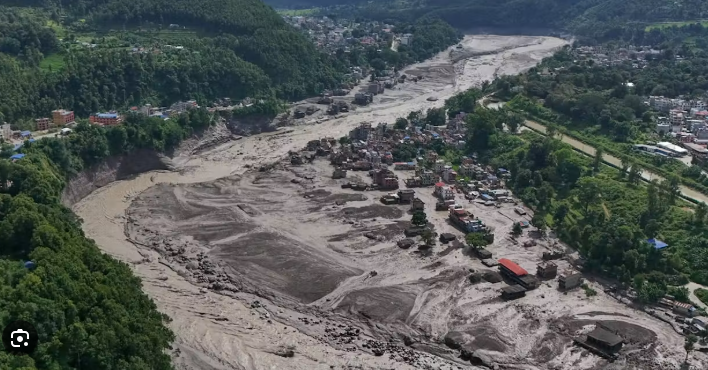
The Overseas Investors Chamber of Commerce and Industry (OICCI) has urged Pakistan to step up climate preparedness, saying the deadly floods in Nepal highlight the growing need for stronger disaster prevention and early-warning systems.
The chamber expressed condolences to the people of Nepal following the devastating flash floods, which have caused extensive loss of life and left thousands of people missing.
OICCI said the disaster should also prompt Pakistan to strengthen its ability to deal with extreme weather, given the country’s repeated experience with floods, displacement, infrastructure damage and loss of livelihoods.
The chamber stressed that disaster management should focus not only on responding to emergencies but also on identifying risks and taking action before extreme weather events occur.
Pakistan is particularly vulnerable to climate-related threats. The country experienced its second-warmest year in 65 years in 2025, after 2024 recorded the highest temperature levels in the same period.
OICCI said higher temperatures, faster glacial melting and changing rainfall patterns are increasing pressure on communities, agriculture, infrastructure and economic activity.
The economic impact is also significant. Climate Change and Environmental Coordination Minister Musadik Masood Malik previously said Pakistan loses around 1 percent of its GDP each year because of climate-related impacts.
OICCI welcomed efforts to improve warning systems for glacial lake outburst floods, flash floods, urban flooding and heatwaves, but said these systems need to become more predictive and comprehensive.
The chamber called for greater investment in climate-resilient infrastructure, forecasting technology, emergency response systems and community preparedness.
It said authorities should be able to identify vulnerable locations in advance and provide communities with enough time to evacuate or take protective measures.
OICCI said stronger climate resilience would help reduce the human and economic cost of future disasters and protect communities as extreme weather events become more frequent and intense.