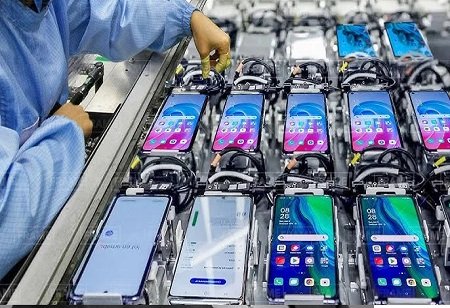
The government has invited Samsung to transform Pakistan into a regional manufacturing and export hub for smartphones, encouraging the South Korean tech giant to ship locally assembled devices to Africa and other emerging markets.
The proposal was made by Commerce Minister Jam Kamal Khan during a meeting with a Samsung Pakistan delegation led by the company’s country head. Senior officials from the Ministry of Commerce also attended the meeting.
Jam Kamal urged Samsung to look beyond Pakistan’s domestic market and use the country’s expanding manufacturing base to integrate into global supply chains through exports. He said Pakistan should capitalize on its growing mobile phone production capacity instead of focusing solely on local demand.
The minister also welcomed Samsung’s proposal to establish certified mobile phone refurbishment facilities in Pakistan. He said a regulated refurbishment ecosystem could create skilled jobs, strengthen the local industry, and open new export opportunities for professionally refurbished smartphones.
During the meeting, Samsung highlighted its investment in local assembly and raised concerns over recent changes to the tax structure. The company said the reduced tariff gap between Semi Knocked Down (SKD) kits and Completely Built Units (CBUs) has weakened the competitiveness of locally manufactured smartphones.
Samsung urged the government to maintain a meaningful tariff differential to support continued investment and encourage local manufacturing.
The delegation also expressed concerns over commercial imports of used mobile phones, arguing that they hurt domestic manufacturers despite Pakistan having sufficient production capacity. Instead, Samsung proposed replacing such imports with certified refurbished devices produced through manufacturer-authorized refurbishment centers offering warranties and quality assurance.
Responding to the industry’s concerns, Jam Kamal said Pakistan’s mobile phone sector has made significant progress and future policies should prioritize genuine manufacturing, higher local value addition, technology transfer, and exports.
He acknowledged concerns over taxation and said they would be reviewed as part of the broader fiscal framework, adding that any incentives should be tied to investment, localization, exports, and value addition.
The minister directed the industry to submit detailed proposals on certified refurbishment, export potential, investment commitments, and international best practices to help shape the revised Mobile Device Manufacturing Policy.
He added that any decision on commercial imports of used mobile phones should be evidence-based, phased, and backed by the availability of certified locally refurbished alternatives to protect consumers.
Reaffirming the government’s support for industrial growth, Jam Kamal said Pakistan offers significant opportunities for global technology companies and expressed confidence that stronger collaboration with manufacturers like Samsung would boost investment, employment, and exports.