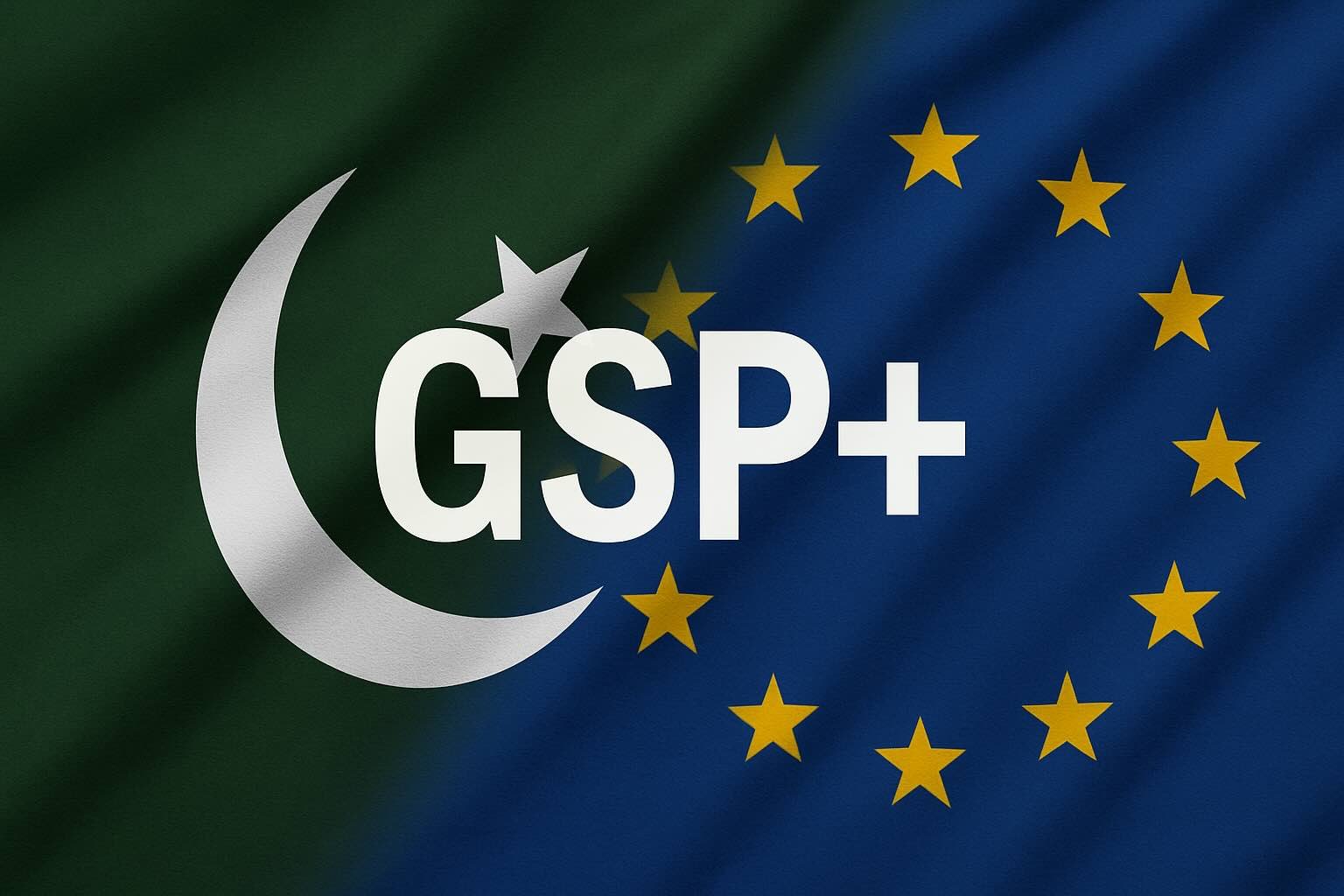
The European Union has urged Pakistan to show stronger implementation of its human rights and rule of law commitments to retain preferential trade benefits under the next phase of its Generalised Scheme of Preferences Plus (GSP+) arrangement.
The issue is particularly important for Pakistan’s textile industry, which accounts for around 70 to 76 percent of the country’s exports to the EU.
EU Ambassador to Pakistan Raimundas Karoblis discussed the upcoming GSP+ process with Pakistan Textile Council (PTC) representatives in Karachi on October 21. The meeting covered Pakistan’s performance under the current arrangement, upcoming assessments, and the role of textile and apparel exports in bilateral trade.
EU Wants Pakistan to Implement Existing Commitments
Karoblis referred to the European Union’s assessment of Pakistan for 2023 to 2025, published on July 16, 2026. He said progress on human rights and the rule of law would be important for Pakistan to secure benefits under the next GSP+ framework.
He clarified that the EU was not introducing new standards but expected Pakistan to implement commitments it had already made under relevant United Nations conventions.
The European Commission plans to work more closely with the Pakistani government to address areas of concern. The approach will focus on measurable short-term improvements, followed by an action plan setting out specific steps, deadlines, and performance indicators.
The framework places greater emphasis on enforcing existing commitments rather than simply ratifying international conventions or passing legislation.
PTC Chairman Fawad Anwar said continued access to GSP+ was crucial for Pakistan’s value-added textile and apparel exporters, supporting employment, tax revenue, and related businesses.
He also warned that the EU’s free trade agreement with India could put Pakistani exporters under greater competitive pressure, even if Pakistan retains its preferential access to the European market.
Textile Industry Seeks Recognition of Progress
PTC Vice Chairman Anees Khawaja said the EU assessment had acknowledged progress in four areas: human rights, labour, the environment, and governance. He invited the EU ambassador to visit Multan to observe how GSP+ had supported jobs and economic activity in smaller cities.
Gul Ahmed CEO Zaki Bashir urged the EU to assess conditions in the textile and apparel export sector separately from its broader national-level findings.
PTC representatives pointed to practices at export-oriented manufacturing facilities, including certified industrial operations, female workforce participation exceeding 70 percent at some sites, and established worker committees.
PTC CEO Muhammad Hasan Shafqaat called for greater clarity and proportionate implementation of emerging EU requirements, particularly the Digital Product Passport and supply chain due diligence rules.
He said these requirements could expand transparency and traceability obligations across entire supply chains, potentially extending to the farm level.
PTC to Submit Recommendations to Government
PTC said it would share the meeting’s findings and industry recommendations with the Prime Minister’s Office, Ministry of Foreign Affairs, and Ministry of Commerce. The council also offered technical support and industry expertise to help coordinate the process, including through a dedicated senior focal point.
Anwar, who serves on the government’s GSP+ reapplication committee, will present the textile and apparel sector’s recommendations to the committee.
Separately, PTC is preparing an assessment of the potential impact of the EU-India free trade agreement on Pakistan’s exports at the request of the Ministry of Foreign Affairs. The findings will be shared with the ministry, the Prime Minister’s Office, and the EU delegation.
The council said it would continue working with the government and the EU delegation to support implementation of the required measures, maintain Pakistan’s preferential access to the European market, and protect the competitiveness of its textile and apparel exports.