




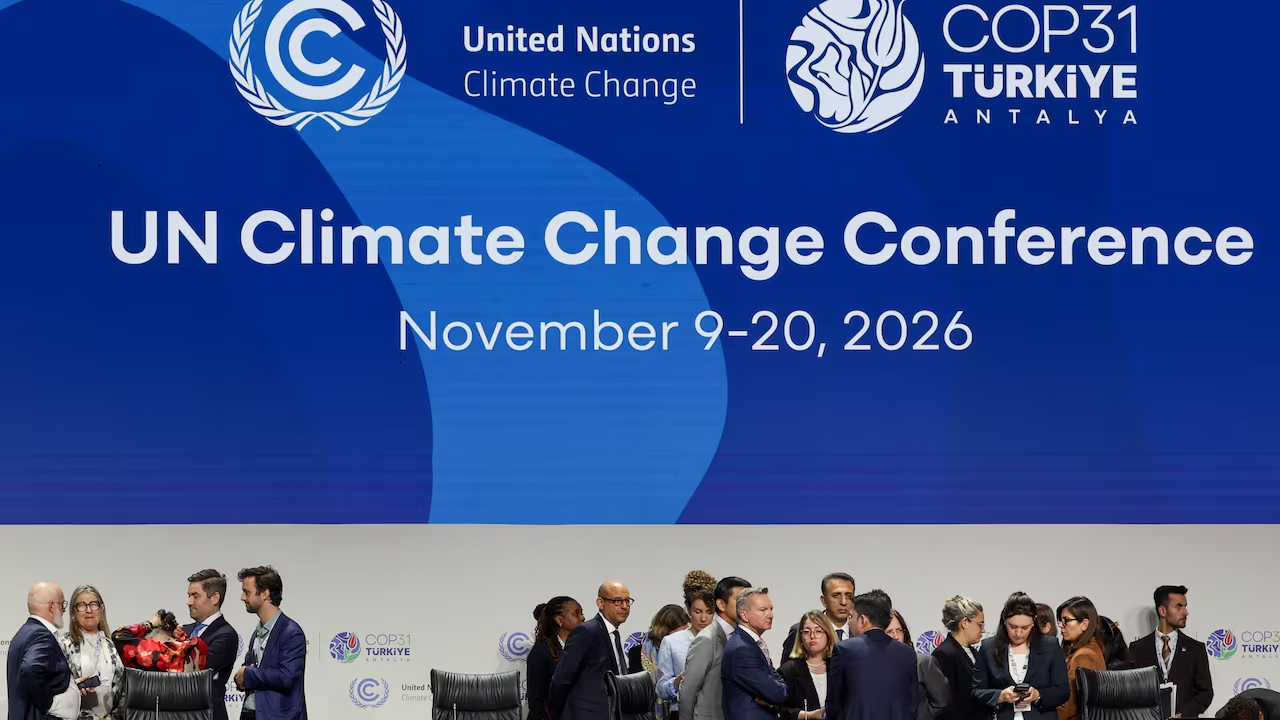
The United Nations’ biggest annual climate conference ended without a final agreement on Sunday, after nearly 200 countries failed to overcome deep divisions over fossil fuels, climate finance and how to protect vulnerable nations from rising temperatures — a collapse that laid bare just how difficult it remains to forge a common response to the climate crisis.
The main disagreement at COP31, held in Turkey, centered on whether the final agreement should explicitly call for a transition away from fossil fuels, the biggest driver of climate change. Some countries insisted the commitment must be included, while others threatened to reject any deal containing such language. Russia warned that reducing oil and gas supplies faster than demand could trigger energy shortages and higher prices, while Saudi Arabia argued that no potential climate solutions should be excluded.
Fossil Fuels Become the Biggest Roadblock
The European Union refused to support an agreement that did not mention fossil fuels, saying the proposed drafts failed to address the climate emergency. Vanuatu and the Marshall Islands also criticized the proposed outcome for failing to confront the role of oil and gas, warning that weak commitments could put vulnerable communities and future generations at risk.
The impasse left negotiators unable to agree on an overarching political statement known as the cover decision. COP31 President Murat Kurum said there would be no new draft after countries failed to reach consensus, adding that negotiations would instead move forward using decisions already agreed upon. He also warned that the process could not continue without producing results.
Developing Countries Demand Climate Finance
The failure to reach an agreement also frustrated developing countries, which called for stronger financial support to deal with climate change. The Philippines said climate finance was essential for reducing emissions, adapting to climate impacts, transferring technology and addressing climate-related losses and damage. Its delegation warned that targets without the money and resources to achieve them were meaningless.
Kenya criticized the proposed outcome for failing to recognize Africa’s specific needs, arguing that countries responsible for a larger share of emissions must take the lead in providing financial support. The Least Developed Countries Group said the negotiations had failed to deliver meaningful outcomes for nations most exposed to climate risks.
Global Leaders Express Disappointment
United Nations Secretary-General Antonio Guterres said he was deeply disappointed that governments had failed to reach consensus, adding that there was no uncertainty in the scientific evidence about the climate crisis.
China’s delegation also expressed disappointment but argued that the failure should encourage countries to strengthen multilateral negotiations rather than abandon them. The United Kingdom and Norway said the proposed agreement fell short of previous commitments and the urgency of the climate crisis, while Brazil’s negotiator said the final outcome should have addressed climate adaptation, increased finance and the needs of vulnerable communities.
Despite the collapse of the main agreement, some progress was made during the conference, including an electrification pledge signed by more than 90 countries. However, delegates acknowledged that these commitments were not enough to make up for the failure to reach a collective deal.