



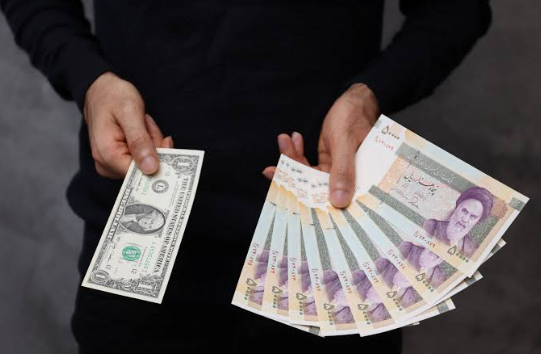
Pakistan and Iran are close to finalizing a long-delayed free trade agreement that could bring customs duties on major exports between the two countries down to zero and push bilateral trade beyond $10 billion.
The agreement has entered its final stages, with both countries completing negotiations and exchanging lists of products to be covered, according to Iran’s state news agency.
Mehrdad Siyadat-Nasab, Deputy Director of the East Asia and Subcontinent Office at Iran’s Trade Promotion Organization, told IRNA on Saturday that the first phase of the agreement could become operational before the end of 2026.
He said the arrangement would reduce customs costs and make trade between the neighbouring countries more competitive.
Under the proposed framework, customs tariffs on a significant portion of Iranian exports to Pakistan would be eliminated. Iran would also consider offering tariff concessions on selected Pakistani products.
Bilateral Trade Could Cross $10 Billion
Siyadat-Nasab estimated that formal and informal trade between Pakistan and Iran currently stands at around $6 billion annually.
He said the existing economic potential could take the figure beyond $10 billion once trade barriers are reduced and commercial links improve.
He also pointed out that some Iranian imports from Pakistan have historically passed through the UAE’s Jebel Ali port. These transactions were not necessarily recorded as direct bilateral trade, meaning official figures may understate the actual commercial relationship.
Iran’s major exports to Pakistan include petrochemicals, liquefied gas, steel, tiles and ceramics.
The Iranian official also called for greater cooperation in agriculture, mining, manufacturing, and technical and engineering services.
He identified Pakistan’s seaports, logistics network and private sector as important channels for expanding trade between the two countries.
What the Trade Deal Means for Pakistan
The proposed tariff reductions could change the cost of several products in Pakistan.
Iranian liquefied petroleum gas (LPG), steel, tiles and ceramics could become more competitive if customs duties are removed or reduced.
However, cheaper imports could also increase competition for Pakistani manufacturers operating in the same industries.
Pakistani exporters could benefit from improved access to the Iranian market through lower tariffs on selected products.
The latest development follows an agreement reached by both countries in August 2026 to work towards increasing bilateral trade to $10 billion.
Pakistan and Iran had also pledged in April 2024 to accelerate the conclusion of their long-pending free trade agreement.
The latest announcement suggests that negotiations have moved closer to implementation, although the final agreement and its product-specific tariff schedules are still to be formally confirmed.