



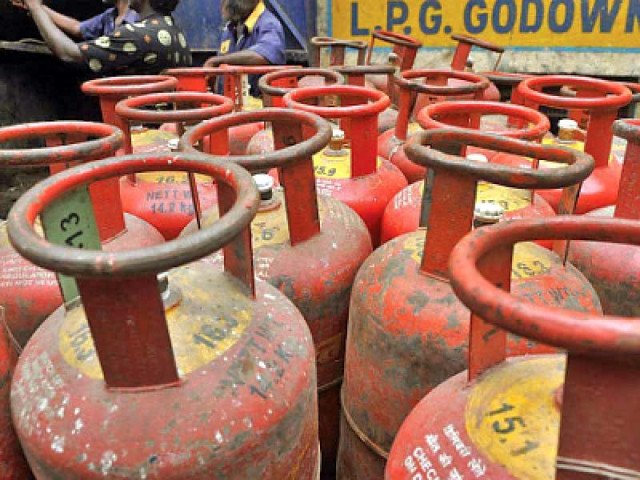
The government plans to introduce a new LPG allocation system under which 10 percent of Pakistan’s locally produced liquefied petroleum gas will be reserved for state-owned marketing companies to ensure supplies to remote and underserved areas.
Under the proposed reforms, exploration and production companies, refineries and other domestic LPG producers will supply this portion to state-owned marketers at the producer price.
The reserved supplies will primarily serve Northern Areas, Gilgit-Baltistan and other remote, mountainous and difficult-to-access locations where households depend on LPG cylinders and existing air-mix plants.
The remaining 90 percent of locally produced LPG will be sold through transparent monthly auctions involving bottlers prequalified by the Oil and Gas Regulatory Authority (OGRA).
The minimum auction price will be set at 5 percent below Pakistan State Oil’s (PSO) import-parity price.
Bottlers seeking to participate will have to meet eligibility requirements covering infrastructure investment, storage facilities, the number of cylinders in circulation, geographical coverage and operational capacity. The proposed framework will also include safeguards against cartelisation.
Special Allocation for PARCO Subsidiary
The proposed policy also provides a special arrangement for PARCO, allowing it to allocate 75 percent of its 90 percent auctionable production share to its subsidiary, PARCO Pearl Gas Limited (PPGL).
The remaining 25 percent will be offered through monthly auctions.
However, PARCO will not be allowed to charge PPGL less than the price discovered through the auction process for the allocated LPG.
The government also plans to seek assistance from the Attorney General for Pakistan to address ongoing litigation involving the LPG sector.
LPG Demand Expected to More Than Double
The proposed reforms come amid rising dependence on LPG as Pakistan’s domestic natural gas production declines and restrictions on expanding the piped gas network remain in place since December 2021.
According to a Cabinet summary, more than 10 million households currently have piped natural gas connections, while over 25 million households, particularly in remote areas, depend on alternative fuels, including LPG.
Pakistan’s LPG market is estimated at 2.4 million metric tons annually and has expanded at a compound annual growth rate of 7.5 percent over the past six years. Demand is expected to grow by another 8 to 8.5 percent annually.
A KPMG analysis cited in the government summary projects annual LPG demand to increase from 2.4 million tons in FY2025-26 to 4.16 million tons by FY2032-33.
Domestic production, meanwhile, is expected to rise from 960,000 tons to 1.35 million tons over the same period.
This would leave a substantial supply gap that would increasingly have to be met through imports, which are projected to climb from 1.4 million tons to 2.8 million tons by FY2032-33.
The ministry estimates that imports currently account for around 71 percent of Pakistan’s LPG supplies. Of the total supply, approximately 16 percent comes through seaborne imports and 55 percent through land routes at Taftan and Gabd-Ramdan.
Domestic refineries contribute around 9 percent of supplies, while exploration and production companies account for the remaining 20 percent.