



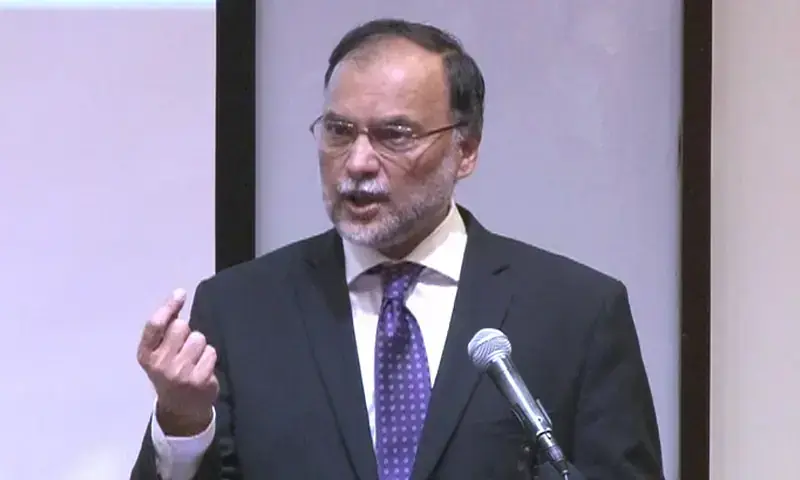
Wars and geopolitical conflicts thousands of miles away can increase fertilizer prices for Pakistani farmers and push up food costs for households, Federal Planning Minister Ahsan Iqbal has warned.
Speaking at the 29th Sustainable Development Conference and 4th Sustainability Investment Expo in Islamabad on November 2, Iqbal said disruptions to global energy markets, food security and supply chains were increasingly affecting countries far removed from conflict zones.
He said Pakistan must strengthen its economic resilience, technological capabilities and long-term development planning to withstand external shocks and remain competitive in an increasingly uncertain global environment.
The conference was organized by the Sustainable Development Policy Institute (SDPI) at Allama Iqbal Open University, with Iqbal attending as the chief guest.
The minister said governments must prepare for emerging challenges and turn them into opportunities rather than face their consequences without adequate safeguards.
He highlighted Pakistan’s efforts to strengthen its technological capabilities through national centers of excellence in artificial intelligence, cybersecurity, big data and cloud computing. These initiatives aim to equip young people with skills required to compete in the global economy.
Global Conflicts Threaten Pakistan’s Economic Stability
Iqbal said international conflicts, including the Russia-Ukraine war, were creating economic disruptions across energy markets, food security, international trade and global supply chains.
He noted that geopolitical tensions were no longer limited to diplomatic and security matters but were increasingly affecting everyday economic conditions.
For Pakistan, disruptions in international markets can translate into higher fertilizer costs for farmers and increased food expenses for households, even when conflicts take place thousands of miles away.
The minister also pointed out that global supply chains were increasingly being reorganized around strategic and political considerations rather than just cost and efficiency.
He said developing economies needed to diversify their international partnerships, strengthen regional connectivity and build economic resilience to remain competitive as global trade patterns changed.
Ahsan Iqbal Calls for Changes in Global Financial System
Iqbal also highlighted the growing debt burden facing developing countries, saying billions of people live in economies where governments spend more on debt servicing than on health and education.
He said mounting debt obligations were limiting the ability of governments to invest in human development, infrastructure and sustainable economic growth.
According to the minister, the ability to withstand external shocks depends not only on the severity of disruptions but also on a country’s preparedness, export diversification and workforce capabilities.
Countries with diversified industries, stronger institutions, technological expertise and skilled workers are better positioned to absorb economic shocks and benefit from emerging opportunities.
Iqbal called for greater international cooperation and reforms to global financial governance to help developing economies manage mounting financial pressures.
He said consistent sustainable development policies, institutional preparedness and long-term economic planning were essential for protecting Pakistan’s economic stability amid growing global uncertainty.