




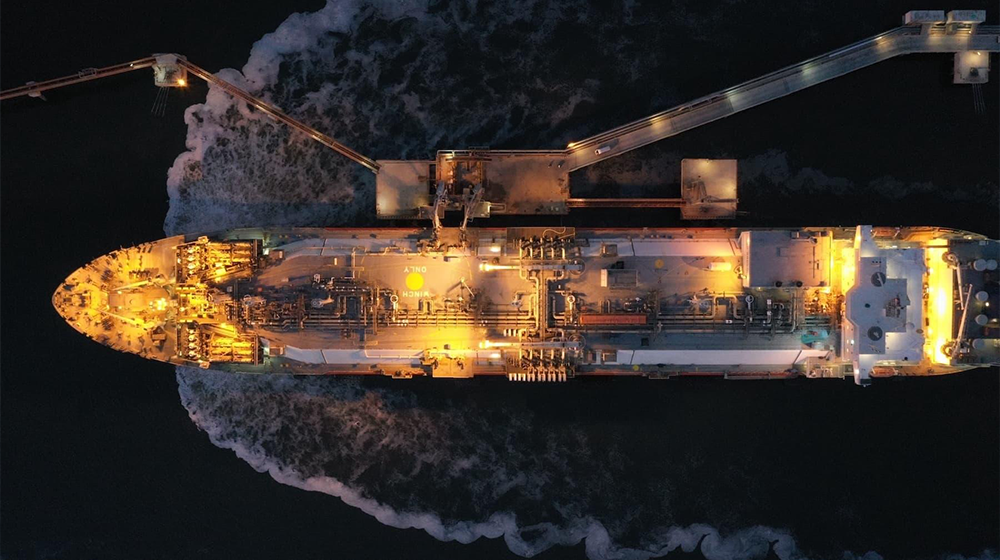
A Qatari LNG tanker carrying gas for Pakistan was attacked near the Strait of Hormuz on Friday, only hours after Iran had approved its passage.
Pakistan had secured permission from Iranian officials for the Marshall Islands-flagged Al Mayeda to cross the strait, following similar arrangements for previous shipments, Bloomberg reported, citing people familiar with the matter. The identity of those responsible for the attack remains unknown.
What Happened to the Ship
The tanker, owned by Qatar Gas Transport Company (Nakilat), was struck by unidentified objects while sailing through the Gulf. It subsequently changed direction, according to vessel-tracking data.
Nakilat said all crew members were safe, with no injuries or environmental damage reported. The vessel remains under the crew’s control while the company assesses the damage.
India’s Shipping Minister Sarbananda Sonowal said the ship was hit in a projectile attack. All 25 crew members, including six Indian nationals, were reported safe.
Qatar condemned the incident, warning that it threatened global energy supplies. The country has also launched an investigation into the attack.
It remains unclear whether the damaged tanker will be able to complete its journey to Pakistan.
What It Means for Pakistan
Pakistan has relied on its relationship with Iran to secure safe passage for Qatari LNG shipments through the Strait of Hormuz. The country received three Qatari cargoes in October.
However, the latest incident shows that approval from Tehran may not be enough to ensure the safe passage of energy shipments.
If the cargo cannot reach Pakistan, the country may need to arrange a replacement shipment from the spot market. LNG prices there have climbed to more than three times their pre-war levels.
Pakistan has already spent heavily on expensive spot LNG purchases since the conflict began. Any further increase in import costs could put additional pressure on re-gasified liquefied natural gas (RLNG) prices and domestic gas supplies.
The risk is particularly concerning as winter approaches and demand for gas from households and industry increases.
LNG shipments through the Strait of Hormuz remained at around 30 percent of their pre-war levels in October, highlighting the continuing disruption to one of the world’s most important energy routes.