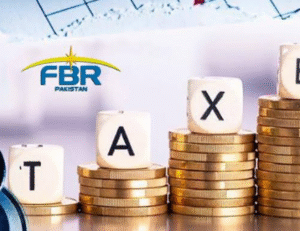




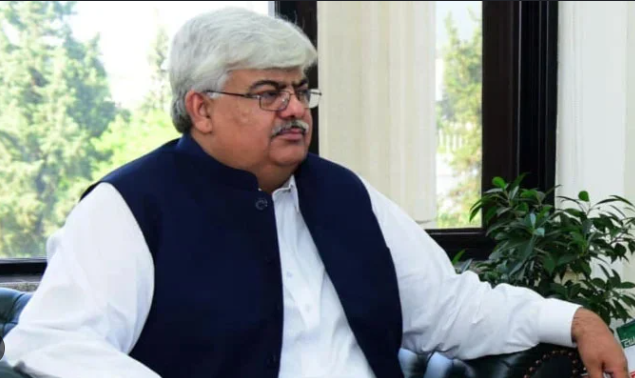
Federal Board of Revenue (FBR) Chairman Rashid Mahmood Langrial has said the dollar exchange rate is a “thermometer, not the fever,” arguing that Pakistan’s weak rupee reflects deeper economic pressures rather than being the root cause of the problem.
In an article published in an Urdu newspaper, Langrial said three broad factors have contributed to the rupee’s decline: higher domestic inflation, weak productive capacity and external economic pressures.
He said inflation is one of the main reasons currencies lose purchasing power over time. When prices rise faster in one country than in another, its currency tends to weaken in relative terms.
Langrial noted that Pakistan has historically experienced significantly higher inflation than the United States. He argued that this gap gradually reduces the value of the rupee in international markets.
He also highlighted Pakistan’s limited ability to produce competitive goods for international markets.
According to Langrial, a country can support the value of its currency by increasing the quantity and quality of goods and services it sells abroad. He cited Vietnam as an example, saying its production base expanded beyond traditional exports into products such as mobile phones and machinery.
The FBR chairman said global developments are another source of pressure on the rupee. Higher US interest rates can attract international capital toward dollar-based assets, increasing demand for the US currency.
Oil prices can also affect the rupee because Pakistan relies heavily on imported petroleum. Langrial said a significant increase in global oil prices means the country needs more dollars to pay its import bill.
He added that foreign exchange reserves can help absorb external shocks but cannot completely protect a currency from international market movements.
Langrial argued that focusing solely on the dollar rate misses the underlying issue. In his view, the exchange rate is an indicator of economic conditions, while the more fundamental problems are persistent inflation, insufficient productive capacity and exposure to external shocks.
He said the first two areas are largely within Pakistan’s control and require improvements in domestic economic fundamentals rather than simply attempts to manage the exchange rate.