



Pakistan does not need another billionaire telling it how to fix agriculture.
Yet here we are.
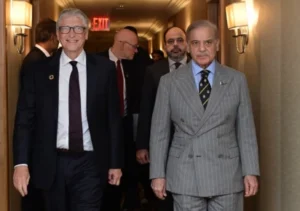
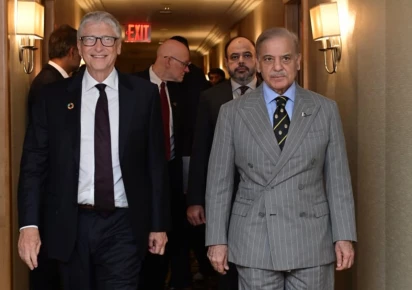
Prime Minister Shehbaz Sharif recently met Bill Gates on the sidelines of the United Nations General Assembly, with discussions reportedly covering agriculture, biotechnology, improved seeds and other areas where Gates’ network could become involved in Pakistan.
The reaction from many Pakistanis was predictable: Why?
Why should Pakistan invite a foreign billionaire into one of its most sensitive sectors when the country already has farmers, agricultural universities, researchers and institutions that understand its land far better?
The concern is not about technology. Pakistan needs better seeds, better research and higher agricultural productivity.
The concern is dependency.
“Improved seeds” sound wonderful until someone asks who owns them, who controls them, whether farmers can reproduce them, what happens to indigenous seed varieties and whether Pakistani agriculture gradually becomes dependent on foreign intellectual property.
That is a perfectly legitimate conversation.
Then there is the Gates record.
Gates’ association with Jeffrey Epstein has remained a major controversy. Gates told a U.S. congressional committee in 2026 that his relationship with Epstein was a “grave error in judgment.” An independent review commissioned by the Gates Foundation found about 30 meetings involving Epstein and Gates Foundation leaders between 2011 and 2014, despite concerns surrounding Epstein. The review found no evidence that the foundation knew about or participated in Epstein’s criminal activities.
That distinction should be made clearly. But so should another point: Pakistan does not have to pretend that reputational questions disappear simply because someone is a billionaire.
Gates’ corporate history is also hardly irrelevant when discussing influence and power.
Microsoft’s long-running U.S. antitrust case resulted in court findings that the company possessed monopoly power in PC operating systems and had used anticompetitive conduct to protect that position. The case specifically examined Microsoft’s efforts to weaken browser competition and preserve its dominance.
Again, this is not about pretending Gates personally committed every action taken by Microsoft.
It is about asking why Pakistan is so comfortable placing influential foreign personalities on a pedestal.
There is also something deeply uncomfortable about the optics.
A Pakistani prime minister meets a billionaire and suddenly the conversation becomes another grand announcement about transforming Pakistan.
Meanwhile, Pakistani farmers are still dealing with basic structural problems. Our agricultural research system needs strengthening. Water management remains a challenge. Productivity remains low in many crops. Farmers need access to technology, finance, markets and reliable policy.
None of that requires Pakistan to find a foreign savior.
If Gates wants to invest in Pakistan, fine.
If his foundation wants to support research, fine.
But Pakistan should set the terms.
Our farmers should not become dependent customers. Our universities should not become spectators. Our researchers should not become footnotes.
And our government should stop behaving as if a photograph with a billionaire is itself a development policy.
Pakistan needs expertise.
It needs investment.
It needs technology.
What it does not need is dependency dressed up as philanthropy.