




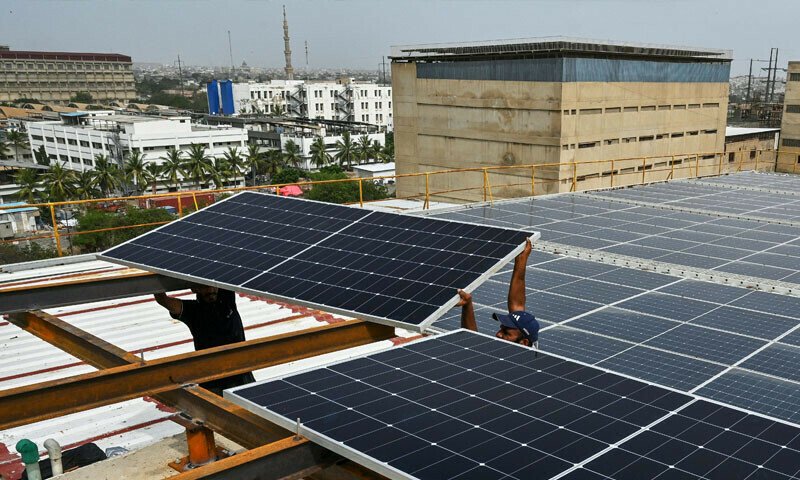
Pakistanis are increasingly shifting towards battery storage solutions instead of selling surplus solar electricity to the national grid, following changes in the country’s net billing mechanism. The trend has triggered a sharp increase in battery imports and investment in energy storage systems.
According to the Pakistan Battery Import Market Report, the country imported batteries with a combined storage capacity of 6.004 gigawatts between January 2024 and August 2026.
Battery imports reached their highest level in April 2026, when systems with a total storage capacity of 652.2 megawatts were brought into Pakistan.
The report estimated that consumers invested around Rs. 126 billion in battery storage systems during April alone as more households chose to store excess solar power for use during high-demand hours instead of exporting electricity to the grid.
The rapid expansion of battery adoption has also encouraged the government to start developing a National Battery Framework to support the growing energy storage sector.
The report highlighted that Pakistan’s solar and battery adoption rate is accelerating faster than many regional markets. The country currently has around 39,000 megawatts of electricity generation capacity, excluding solar, while transmission and distribution losses account for nearly 18 percent of total generation.
Globally, energy storage capacity is projected to reach 1.5 million megawatts by 2030, while investments in battery storage are expected to total $1.2 trillion between 2024 and 2035.
The report noted that declining lithium iron phosphate (LFP) battery prices have made storage systems more affordable. Average battery pack prices have fallen from $151 per kilowatt-hour in 2022 to around $70 per kilowatt-hour in 2025, improving affordability for consumers.