



Pakistan’s reliance on RLNG for electricity generation declined significantly in FY26, with RLNG-based power production falling to its lowest level in eight years amid supply disruptions linked to the US-Iran conflict.
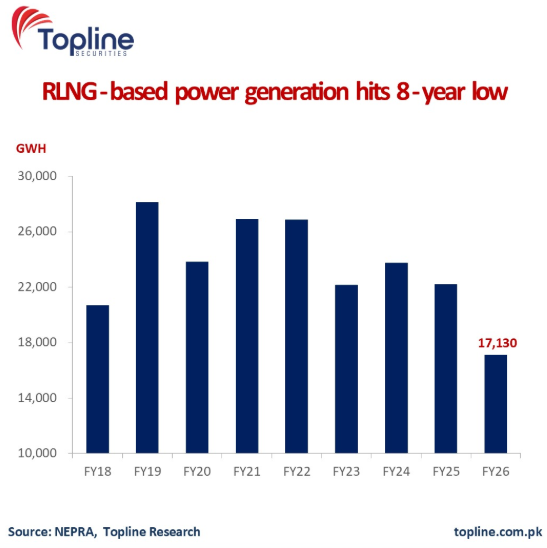
The reduction in RLNG availability, combined with a surge in international spot LNG prices, weakened the economic viability of running RLNG-based power plants. As a result, coal-fired plants and other generation sources gained a larger share in the country’s electricity mix.
The shift highlights the impact of global geopolitical developments on Pakistan’s energy sector, where dependence on imported fuels exposes the power system to external supply and price shocks.
With RLNG supplies constrained and costs rising, power producers increasingly relied on alternative fuels to meet electricity demand during FY26. The changing generation pattern reflects growing pressure on Pakistan to diversify its energy sources and reduce exposure to volatile international fuel markets.