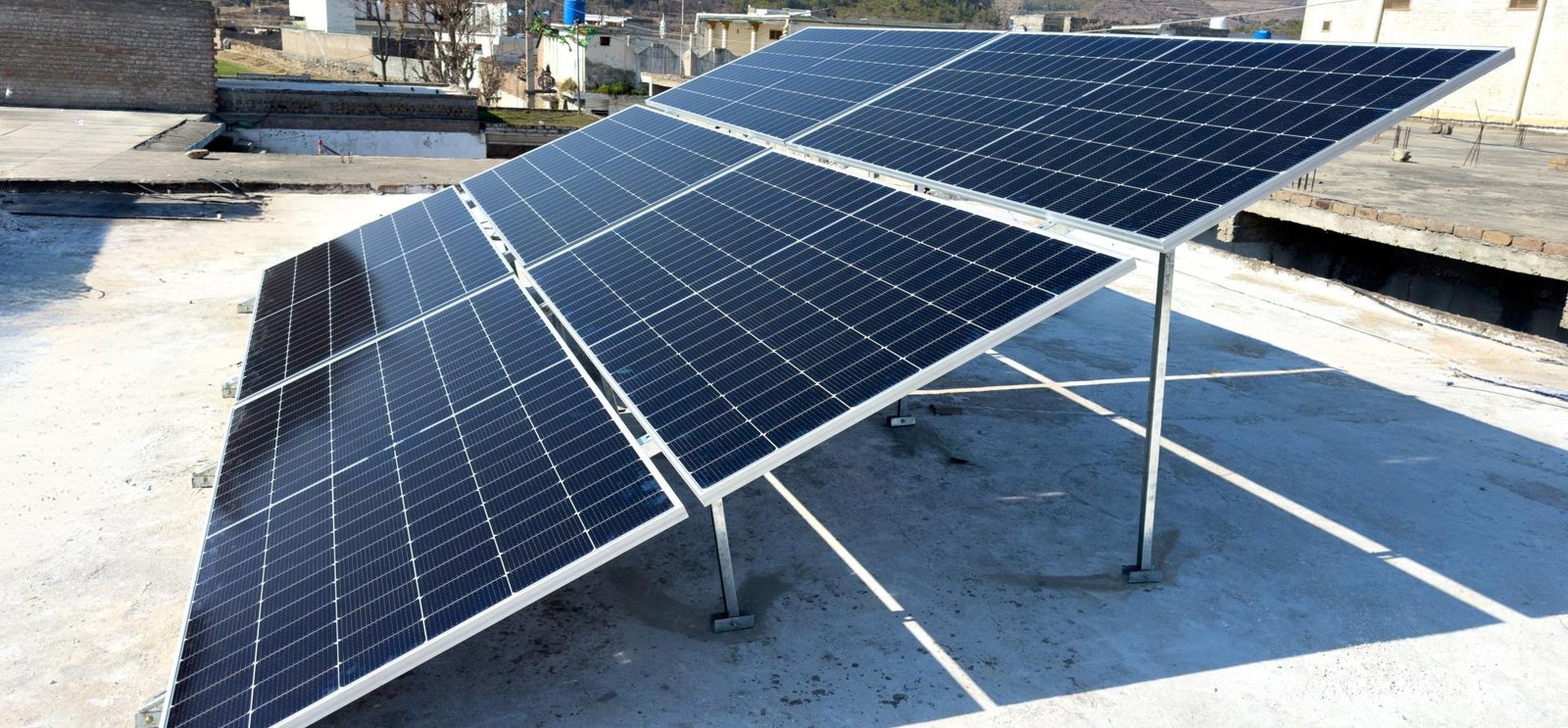
The government has shared a new electricity pricing plan with the International Monetary Fund (IMF) that could significantly increase fixed charges for industrial consumers using less than their sanctioned load, particularly those shifting to solar and other off-grid energy sources.
The proposal, officially called the two-part industrial tariff policy, is aimed at recovering fixed costs and capacity payments from industries as more consumers move away from the national grid due to high electricity prices and slowing economic activity.
Under the proposed structure, industries consuming more electricity from the national grid would get lower per-unit rates, while those drawing less power would face higher fixed charges. A spokesman for the Power Division confirmed that the policy is under consultation and may be implemented within the next two months.
According to a report by Express Tribune, Power Minister Sardar Awais Laghari recently shared the plan with the IMF. The policy is based on the assumption that higher fixed charges and lower unit costs would encourage industrial consumers to remain connected to the national grid and increase their consumption.
In its initial phase, the new tariff would apply only to industrial consumers, though officials are considering extending it to commercial and residential users later.
The move comes as the government tries to slow the growing migration away from the national grid. High electricity costs have pushed many consumers toward cheaper alternatives such as solar systems and gas-based captive generation.
Officials believe the revised tariff structure could spread fixed power-sector costs over higher electricity sales and reduce per-unit electricity prices. Preliminary estimates suggest the policy could generate around 1,000MW in additional demand within six to 12 months of implementation, depending on market response.
At present, electricity bills are still driven more by energy charges than fixed charges, although the latter have been increasing steadily. The Power Division argues that the current pricing system does not provide enough incentive for industrial consumers to increase grid usage.
In one example cited by officials, an industrial consumer in Karachi received a bill of Rs. 8,158 for using only four units of electricity, translating into an effective cost of Rs. 2,040 per unit because of a fixed charge of Rs. 6,750. Under the proposed framework, such fixed charges could rise further for low-usage consumers.
The IMF has also raised concerns during recent budget discussions over the fast decline in industrial electricity demand from the national grid. Officials fear that if more high-paying consumers leave the system, the already strained power sector could face a deeper financial crisis, leaving distribution companies with even fewer viable customers.
The IMF has asked the government to regularly share data on industrial consumption trends and the number of users leaving the national grid before giving final approval to the plan.
Speaking on Mohammad Malick’s show, the power minister said fixed costs make up 75 percent of power generation expenses, while only 25 percent relates to the actual cost of electricity. He said fixed costs decline during high-consumption periods but rise sharply when demand falls.
A Power Division spokesman said the proposed tariff would be optional rather than mandatory and is intended to improve utilisation of existing power infrastructure while supporting industrial growth.
He said many industrial users maintain a high sanctioned load or maximum demand capacity but consume relatively small amounts of electricity. Despite that, the power sector still has to maintain generation, transmission, and distribution infrastructure to ensure supply remains available, creating fixed costs regardless of actual usage.
Under the proposed model, industries using more than 50 percent of their sanctioned load could get a reduction in energy tariffs of around one to two US cents per kWh, bringing effective rates down to roughly seven to eight US cents per kWh.
Officials say tariffs could fall further to nearly six US cents per kWh at even higher utilisation levels, potentially making Pakistan’s industrial electricity prices more competitive internationally.
The Power Division says aligning tariffs more closely with the sector’s underlying cost structure could benefit both the government and industrial consumers, particularly those operating at higher load utilisation.
The policy is still being finalised and would require approval from relevant authorities and regulators before implementation. If approved, continuous-process industries and other energy-intensive sectors are expected to be among the first likely adopters.
Officials also believe the new pricing structure could influence industrial investment decisions related to captive generation and solar installations, especially if daytime grid tariffs become comparable to the levelised cost of solar power.