




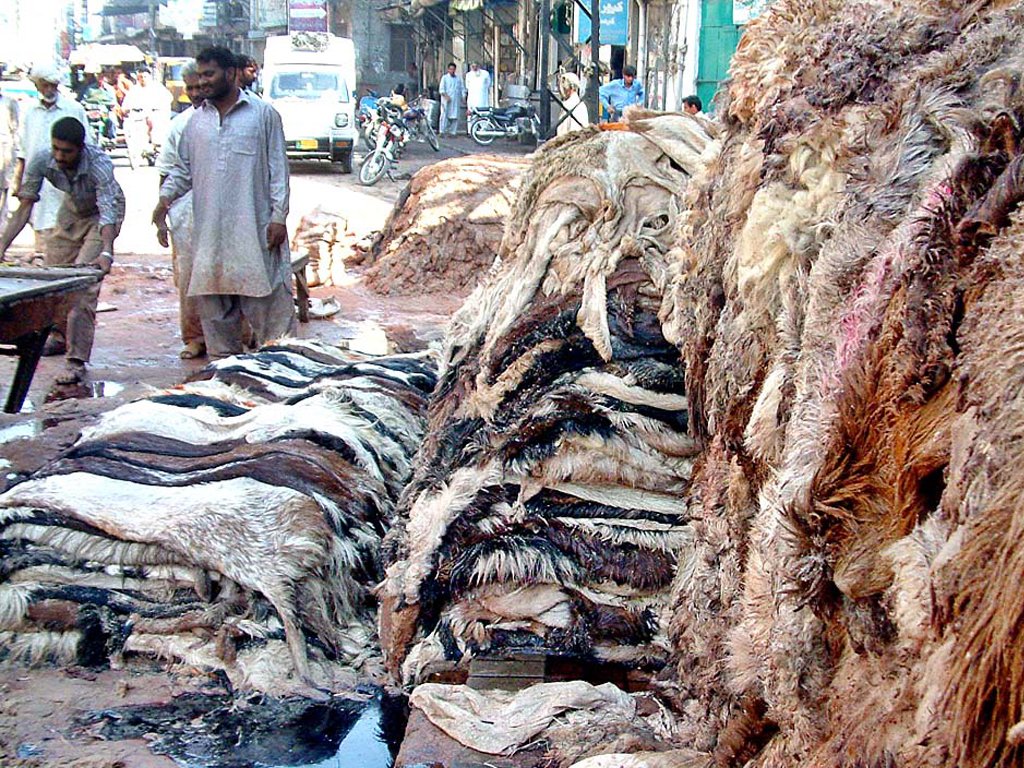
Pakistan’s leather industry received a major seasonal boost this Eid ul Adha, with an estimated 7.5 million animal hides collected across the country, generating around Rs. 8.7 billion in related economic activity.
Industry estimates show that the collected hides include approximately 2.8 million from cattle (cows and bulls), 4.3 million from goats, 500,000 from sheep, and nearly 30,000 from camels.
The figures underline the continued economic importance of Eid ul Adha for Pakistan’s leather value chain, which depends heavily on sacrificial animal hides as a key raw material source each year.
According to the Pakistan Tanners Association, around 6.36 million animals were reportedly sacrificed during this year’s Eid period, reflecting the large-scale commercial activity linked to the livestock sector.
Over the past decade, the number of sacrificial animals in Pakistan has increased by roughly 17 percent, expanding the supply base for tanneries and leather manufacturers.
Industry stakeholders also note a structural shift in the sector over recent years, with Pakistan gradually moving away from exporting raw and semi-processed leather toward higher-value finished goods.
This transition has contributed to improved export performance, with leather-made product exports reaching about $694.2 million, signaling stronger value addition in the industry’s export mix.