



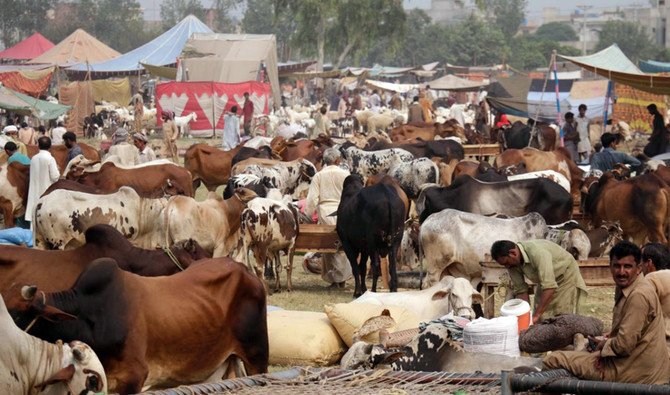
Eid ul Azha generates an estimated Rs. 641 billion in economic activity in Pakistan each year, making it one of the country’s largest seasonal markets despite operating largely outside formal financial systems.
According to Dawn, around 7.4 million animals are sacrificed nationwide during the three-day religious festival.
A recent study places total spending between Rs. 539 billion and Rs. 752 billion, with Rs. 641 billion used as the central estimate.
This level of spending is equivalent to nearly 60 percent of the federal Public Sector Development Programme, which stands at around Rs. 1.1 trillion, highlighting the festival’s massive economic footprint.
The report also underscores Eid ul Azha as a major channel of rural-to-urban wealth transfer, with livestock farmers earning over Rs. 400 billion from animal sales alone.
In addition, an estimated 532,000 tons of meat are distributed during the festival, making it the largest annual food redistribution event in the country.
Cash circulation also rises sharply ahead of Eid. Currency in circulation increases by Rs. 619 billion, with adjusted estimates suggesting an Eid-driven liquidity surge of about Rs. 369 billion. When economic multipliers are applied, the resulting activity—around Rs. 609 billion—closely aligns with livestock-based estimates.
Overall, Eid ul Azha remains a major driver of Pakistan’s informal economy, sustaining livestock markets, transporters, butchers, hide collectors, and tannery workers while generating hundreds of billions in activity that is largely absent from official economic data.