



Pakistan’s rapid distributed solar expansion has been overwhelmingly financed by consumers themselves, with formal banking channels contributing only a minimal share, according to a new industry report.
The Customer Owned Renewable Electrification (CORE) Finance Mapping study, released by Renewables First, finds that just 3.4% of the estimated USD 14 billion invested in distributed solar systems in Pakistan has come through formal debt financing.
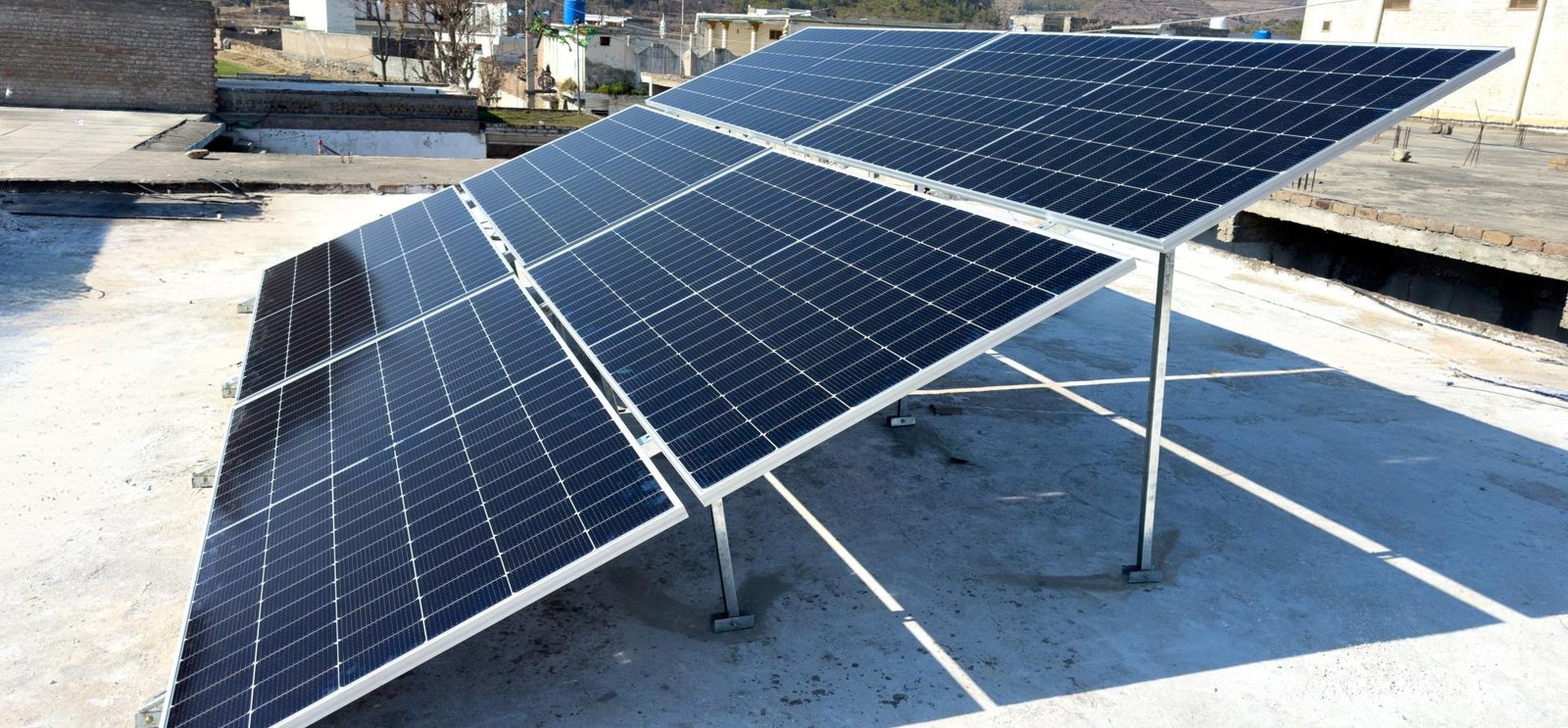
The report highlights that Pakistan’s distributed solar capacity reached 38 GW in FY25, largely driven by rising electricity costs and inflation, which have made solar the most economical energy option for households, agriculture, and industry.
Of the total capacity, 21.3 GW is installed behind the meter, 9.7 GW is off-grid, and 7.3 GW operates under net-metering. The residential sector accounts for the largest share of installations, followed by industrial, agricultural, and commercial users.
Residential Adoption Surge, Minimal Bank Lending
More than 7.3 million households have adopted solar systems across the country. However, financing penetration in the residential segment remains below 1%, the lowest across all sectors.
The report notes that retailer financing and Buy Now Pay Later (BNPL) models have partially filled the gap, but most systems are still purchased outright in cash. It concludes that the main barrier is not demand, but the lack of suitable financial products and distribution channels.
Agriculture Sector Transformation
Around 1 million agricultural tubewells have been converted to solar power. The share of solar in tubewell energy consumption has risen sharply from near zero to 61% between 2022 and 2025, significantly reducing dependence on diesel, which previously accounted for 15–20% of farming input costs.
Agricultural solar financing is mainly provided by microfinance institutions and select banking products, supported by government subsidy programs and State Bank of Pakistan priority lending initiatives. Despite this, formal financing penetration in agri-solar stands at 3.1%, accounting for less than 0.5% of total agricultural lending between FY22 and FY25.
Corporate and Industrial Financing Concentration
In the commercial and industrial segment, financing remains concentrated among large, creditworthy clients with strong cash flows. Small and medium enterprises largely rely on cash purchases or informal credit arrangements.
Industrial financing penetration stands at 9.3%, while the commercial segment is at 4.8%. Below this level, formal lending activity is minimal, with banks and MFIs largely absent from smaller market segments.
Key Insight from Study
“Distributed solar does not fit traditional credit models due to small ticket sizes, high transaction costs, and collateral-focused lending that ignores energy savings as repayment capacity. Most consumers who can self-finance have already adopted solar. The next phase of growth depends on unlocking structured financing at scale,” said Ahtasam Ahmad, Energy Finance and Climate Tech Lead at Renewables First.