




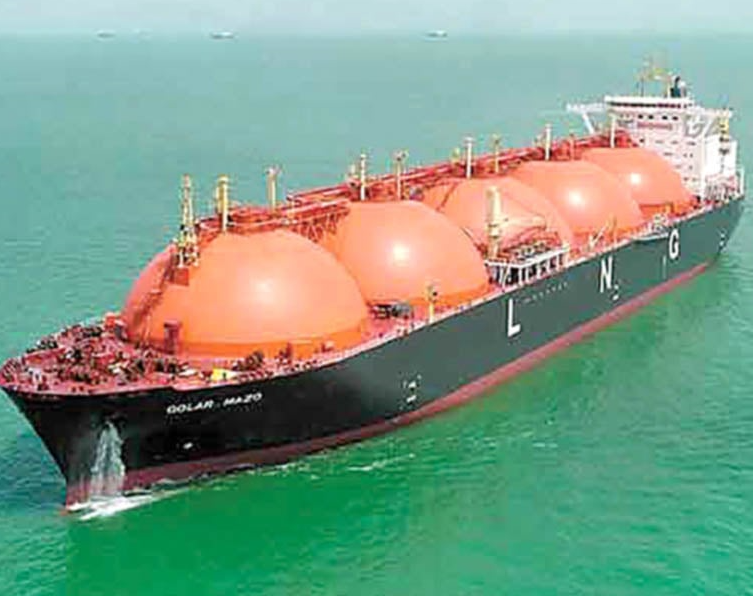
Pakistan is working to secure the safe passage of two liquefied natural gas cargoes from Qatar as authorities move to prevent supply disruptions linked to tensions around the Strait of Hormuz.
The two vessels are already loaded and waiting near the mouth of the strait, while Pakistani authorities remain engaged in diplomatic and operational coordination to ensure their movement into open waters, according to officials familiar with the matter. The process includes consultations with Iranian counterparts.
Petroleum Minister Ali Pervaiz Malik has held talks with Iran’s ambassador in Islamabad, followed by contacts between Pakistani officials and Iranian authorities aimed at facilitating the transit of the ships, the officials said.
The push comes as Pakistan faces tight domestic supply conditions. The country’s immediate LNG needs are currently being met by the Seapeak Magellan, which is docked at the Pakistan GasPort Consortium terminal carrying about 140,000 cubic meters of LNG arranged by TotalEnergies at $18.40 per million British thermal units.
The terminal is handling close to 300 million cubic feet per day of re-gasified LNG, with around 250 million cubic feet allocated to the power sector. That supply is being supplemented by 150 million cubic feet per day of local natural gas priced at RLNG rates, while another 45 million cubic feet is being diverted to K-Electric power plants, the officials said.
Current stocks are expected to meet demand only through the first 10 days of May, making the timely arrival of the two Qatari cargoes critical to maintaining supply balance during the early summer period.
Pakistan’s energy imports have come under growing pressure from regional instability. Earlier efforts to bring in four Qatari LNG cargoes were disrupted after conflict involving the US, Israel and Iran affected shipping through the Strait of Hormuz, the officials said.
Despite the pressure, Pakistan has so far avoided widespread power outages. The Power Division says higher RLNG availability and hydropower generation of around 6,000 megawatts have helped stabilize the national grid, with only revenue-based load management continuing in some areas.