Pakistan increased its military expenditure by 11 percent to $11.9 billion in 2025, largely driven by fresh arms procurement and payments linked to earlier defence contracts, according to new data released by the Stockholm International Peace Research Institute (SIPRI).
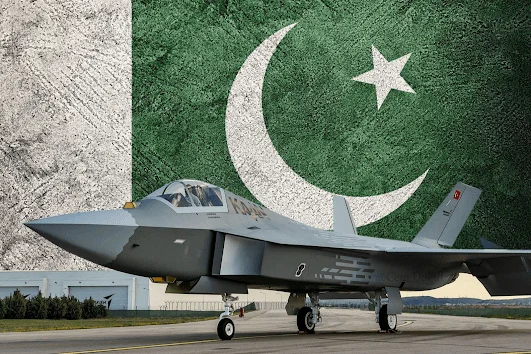
The institute’s latest assessment of global military spending noted that Islamabad’s higher defence outlay followed the armed confrontation with India in May 2025. During the year, Pakistan placed new orders for aircraft and missile systems from China while continuing payments on previously agreed acquisitions that are approaching completion.
India also recorded a substantial increase in military spending during the same period. Ranked as the world’s fifth-largest defence spender, India raised its military budget by 8.9 percent to $92.1 billion in 2025.
SIPRI said the escalation between the two neighboring countries, which saw the deployment of combat aircraft, drones, and missile systems, played a significant role in shaping India’s defence allocations. Capital spending on military aircraft programs was revised upward by roughly 50 percent compared with initial projections, while operational and personnel expenditures for the Indian Air Force rose by 18 percent.
Worldwide, military expenditure continued to expand, reaching $2.887 trillion in 2025 after growing by 2.9 percent in real terms. This marked the 11th consecutive year of increases in global defence spending and reflected a 41 percent rise over the past decade.
Although spending continued to grow, the pace slowed compared with 2024, when global military expenditure jumped by 9.7 percent. The increase recorded in 2025 represented the smallest annual rise since 2021.
The global military burden — defined as the share of world gross domestic product allocated to defence — edged up to 2.5 percent in 2025 from 2.4 percent a year earlier. Military expenditure accounted for an average of 6.9 percent of total government spending worldwide, slightly below the 7.0 percent recorded in 2024. On a per-person basis, global defence spending stood at $352.
SIPRI noted that overall global military expenditure rose despite a reduction in spending by the United States, the world’s largest defence spender. Significant increases across Europe, along with continued growth in Asia and Oceania, more than offset the US decline. Excluding the United States, global military spending expanded by 9.2 percent during the year.
The findings underline how ongoing geopolitical tensions, regional conflicts, and accelerated military modernization programs continue to drive defence budgets higher across much of the world.