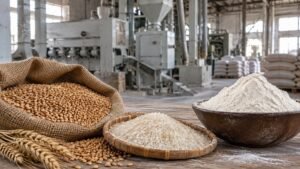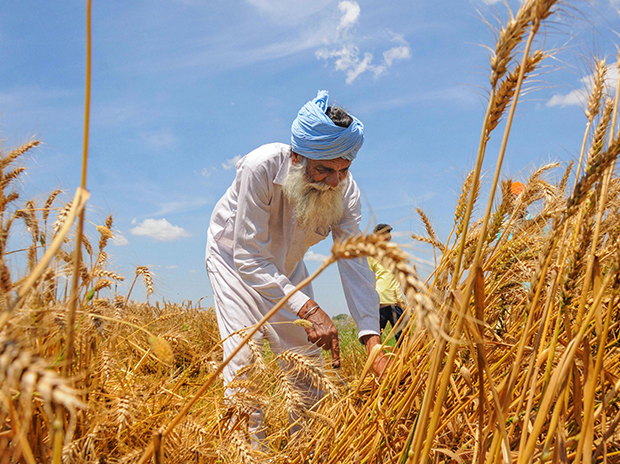
Pakistan is expected to harvest 29.31 million tons of wheat during the 2025–26 Rabi season, falling slightly short of the government’s production target of 29.678 million tons, according to estimates reviewed at a meeting of the Federal Committee on Agriculture.
The projected output is around 1.24 percent below the official goal, largely because farmers cultivated a smaller area than initially planned. Wheat was sown on roughly 9.385 million hectares, compared with the targeted 9.648 million hectares, reflecting ongoing pressures on agricultural land use.
Despite missing the benchmark, the outlook still points to an improvement compared to last year. Pakistan produced 28.42 million tons of wheat from 9.1 million hectares in the previous season, meaning overall output is expected to rise by more than 3 percent year-on-year.
Punjab is once again set to dominate national wheat production, contributing an estimated 22.04 million tons. Sindh is projected to produce 4.402 million tons, while Khyber Pakhtunkhwa and Balochistan are expected to deliver 1.411 million tons and 1.450 million tons, respectively.
The meeting, chaired by Federal Minister Rana Tanveer Hussain, also reviewed forecasts for other major crops. Potato production is expected to surge to 12.171 million tons, marking a significant increase of over 23 percent. Gram output is projected to post an even sharper jump, rising more than 52 percent to 262,030 tons.
However, not all crops are showing positive trends. Tomato production is likely to decline by nearly 12 percent, while onion output is also expected to register a modest drop.
Looking ahead, agriculture planners finalized targets for the 2026–27 Kharif season, setting cotton production at 9.64 million bales and rice output at 9.17 million tons.
Officials informed the committee that water availability for the upcoming Kharif season is expected to reach 67.451 million acre-feet, although soil moisture levels across key farming regions remain under strain following earlier dry weather conditions.
Authorities added that inputs for the next crop cycle appear stable, with adequate seed supplies and comfortable fertilizer availability supported by domestic urea production and existing inventories.