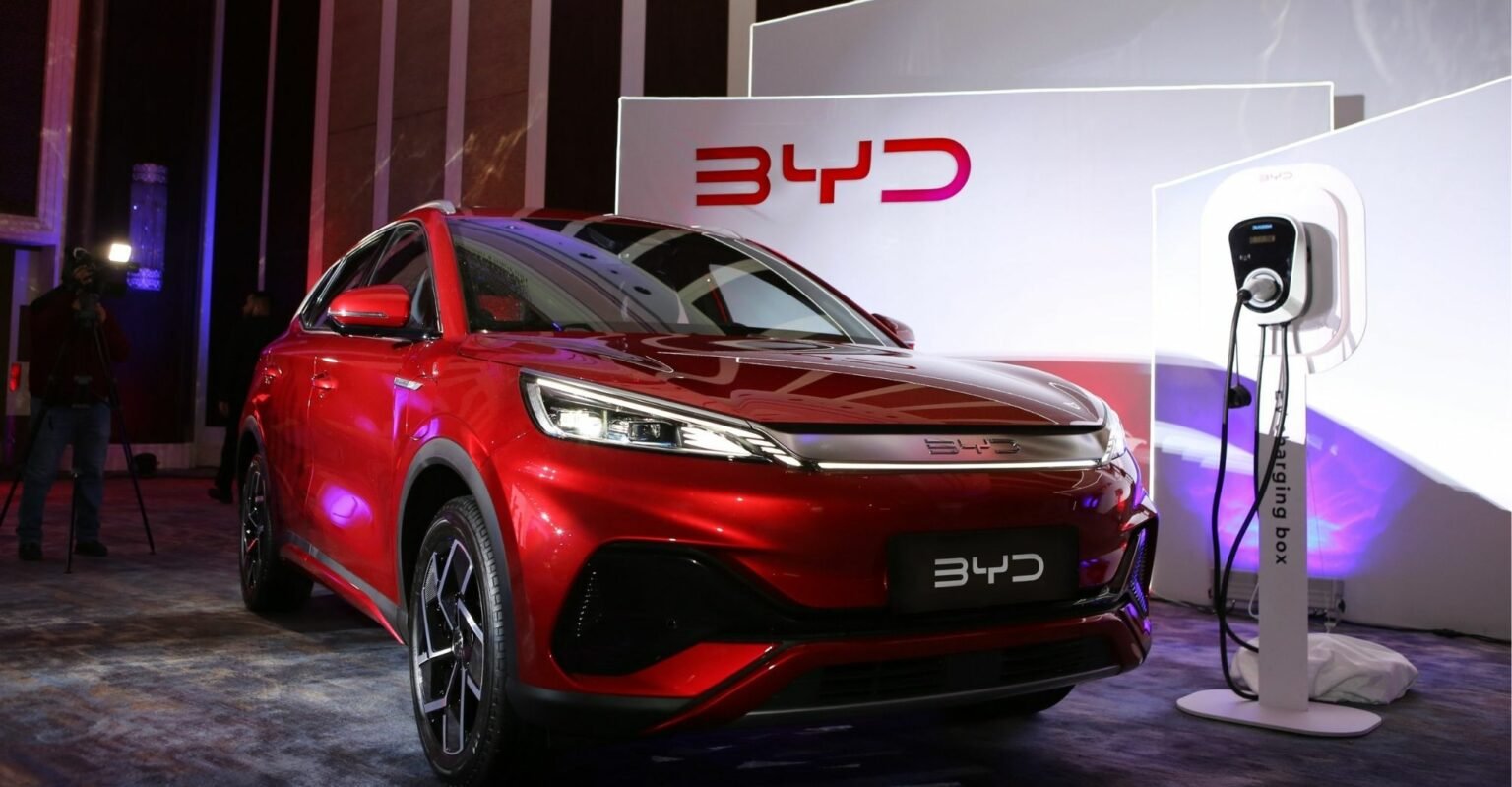
Chinese electric vehicle giant BYD is in the final stages of completing its $150 million vehicle assembly plant in Gharo, Sindh, with the company preparing to roll out its first locally assembled vehicle in Pakistan in the near future.
The facility, being developed by BYD Pakistan–Mega Motor Company (MMC), is currently undergoing equipment installation and commissioning ahead of production. Once operational, the plant will have an annual production capacity of around 25,000 vehicles, making it one of the country’s largest new-energy vehicle (NEV) manufacturing facilities.
The project is being completed in less than two years from groundbreaking, making it one of Pakistan’s fastest automotive manufacturing developments of its scale.
The update comes days after BYD Pakistan received its largest-ever shipment of more than 2,000 vehicles through a roll-on/roll-off (RoRo) vessel to meet rising local demand.
The company said the imported vehicles will help accelerate customer deliveries and maintain inventory across its dealership network while local production is being finalized.
BYD attributed the growing demand to increasing consumer interest in electric vehicles, supported by rising fuel prices, lower operating costs compared with conventional petrol and diesel vehicles, and expanding charging infrastructure across the country.
According to the company, its proprietary EV technology enables running costs of up to 75 percent lower than comparable internal combustion engine (ICE) vehicles while maintaining high standards of safety, performance and reliability.
To support EV adoption, BYD Pakistan and HUBCO Green Private Limited (HGL) have already developed a charging network stretching approximately 1,300 kilometers from Karachi to Peshawar, comprising 19 public DC fast-charging stations. The network is planned to expand further into additional cities and major travel corridors.
BYD entered Pakistan’s passenger vehicle market in 2024 through a partnership with Mega Motor Company and has been investing in local manufacturing to support the country’s growing electric vehicle market. The company plans to complement local production with imports as demand continues to increase.