




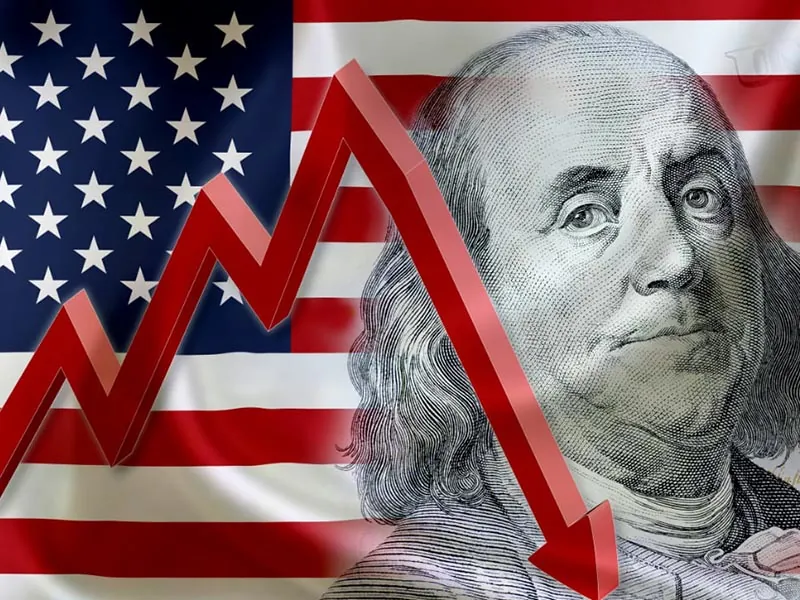
The United States is facing mounting economic pressure on two critical fronts — rising debt servicing costs at home and a gradual decline in the global dominance of the US dollar abroad.
Recent data shows that the US dollar now accounts for around 46% of global foreign exchange and gold reserves, its lowest level in at least 26 years. The share has fallen by roughly 15 percentage points since 2017, reflecting a steady shift in global reserve allocation away from the dollar.
Excluding gold, the dollar’s share of global reserve currencies stands at about 57%, the weakest level since 1994, according to International Monetary Fund (IMF) data. Central banks have increasingly diversified their holdings, with higher allocations toward gold and other currencies over recent years.
This shift comes as global monetary authorities accelerate gold accumulation, signaling growing appetite for diversification in reserve management strategies.
At the same time, concerns are intensifying over the US fiscal position. In fiscal year 2025, interest payments on US government debt consumed around 18 cents of every dollar in federal revenue — the highest level since the 1990s. Projections by the Congressional Budget Office (CBO) suggest this could rise to 25 cents by 2035, meaning one in every four dollars of government income may be spent solely on interest payments.
The last time the dollar’s share of global reserves fell below the 50% mark was in 1990–1991, a period marked by recessionary pressure, inflation concerns, and weakening confidence in the US economic outlook.
Together, the rising debt burden and the gradual erosion of dollar dominance highlight a broader shift in global financial dynamics, with long-term implications for both US fiscal stability and international monetary trends.