Two large crude carriers were forced to reverse course while attempting to enter the Persian Gulf through the Strait of Hormuz on Sunday, as diplomatic talks between the US and Iran ended without agreement, adding fresh uncertainty to an already sensitive maritime corridor.
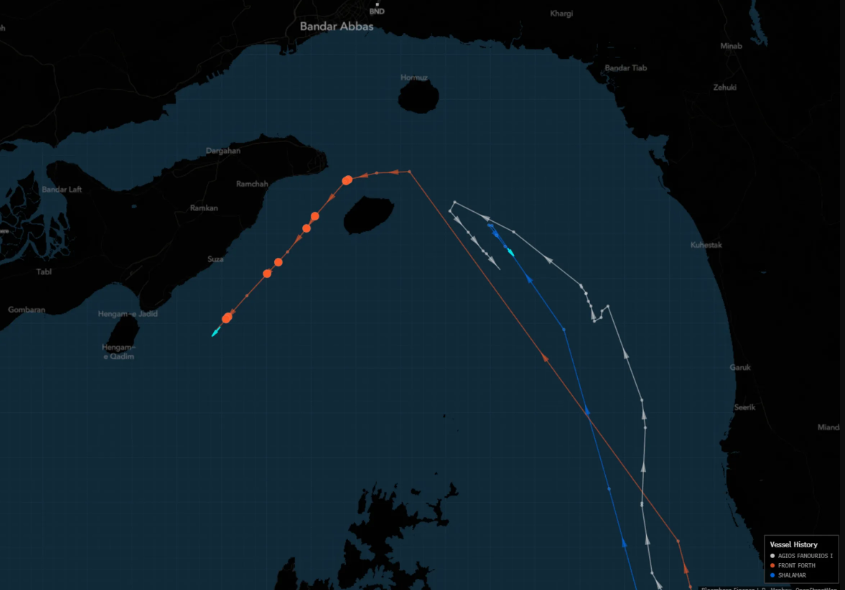
Ship-tracking data showed that three very large crude carriers approached the narrow waterway from the Gulf of Oman late Saturday. By early Sunday, two vessels — the Iraq-bound Agios Fanourios I and the Pakistan-flagged Shalamar, en route to the United Arab Emirates — turned back near the waters off Iran’s Larak Island.
A third vessel, Mombasa B, continued its transit through the designated shipping lane between Larak and Qeshm islands, though its final destination has not been confirmed.
All three ships were reported to have prior authorization for passage, but the sudden change in movements came shortly after the breakdown of US–Iran negotiations in Islamabad, raising concerns over the stability of shipping operations in the region.
The Strait of Hormuz, a vital global energy chokepoint, has seen fluctuating traffic patterns in recent weeks amid heightened geopolitical risk. While some vessels have successfully transited, others have aborted passages mid-route, reflecting persistent caution among shipping operators.
Recent weeks have also seen similar reversals by container ships and LNG carriers, though overall movement had shown signs of gradual recovery before the latest developments.
Shipping companies connected to the vessels involved had not issued immediate public comments at the time of reporting.