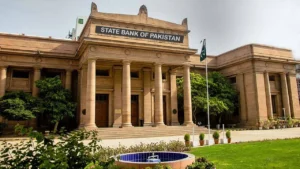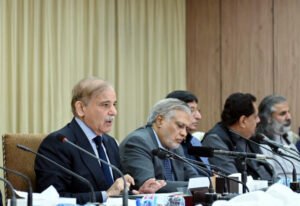




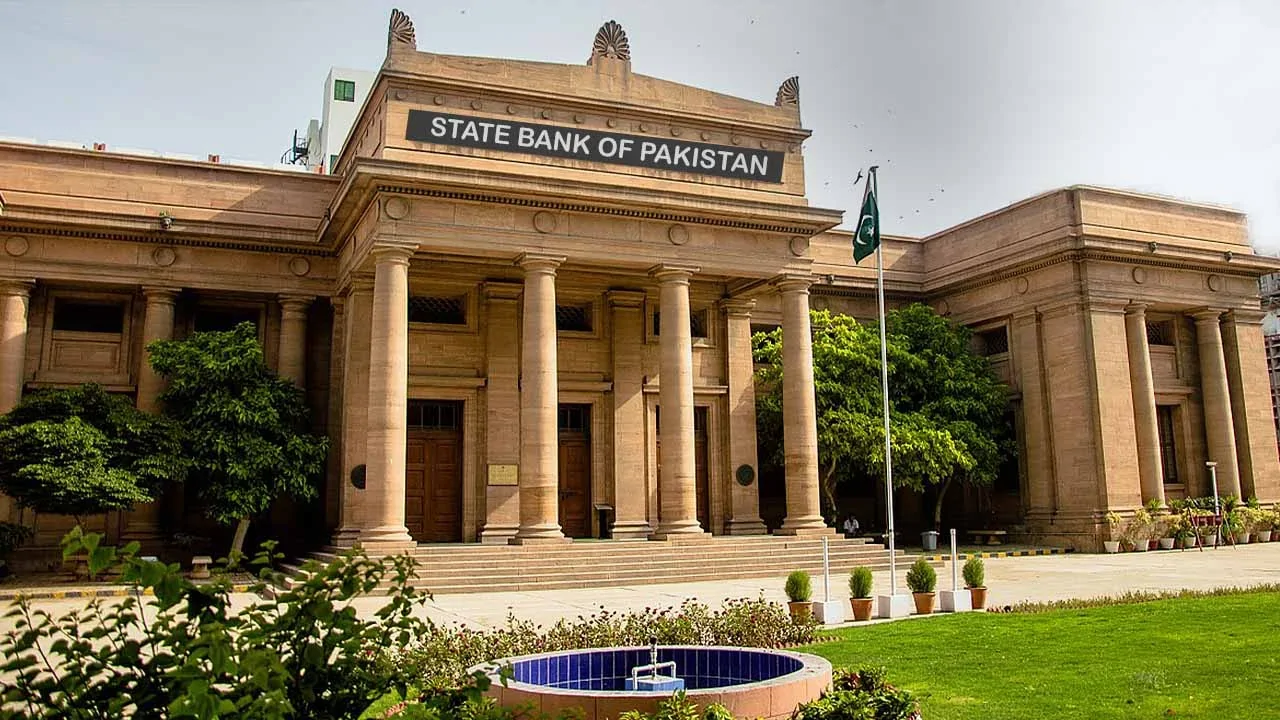
The State Bank of Pakistan (SBP) announced on Monday that the Monetary Policy Committee has kept the interest rate unchanged at 10.5 percent.
The regulator made the announcement in its meeting held on March 9, 2026.
Previously, the central bank kept the key rate unchanged in its meeting held on January 26, 2026.
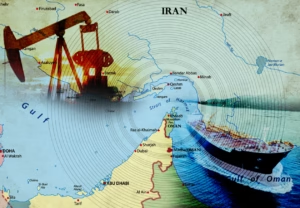
The MPC noted that the conflict in the Middle East has led to a sharp rise in global fuel prices as well as freight and insurance costs, while also affecting cross-border trade and travel. Given the evolving nature of the situation, the committee observed that both the intensity and duration of the conflict will be key factors determining its impact on the domestic economy. In this regard, the committee acknowledged the important role of prudent monetary and fiscal policies in strengthening the economy’s resilience to shocks.
The MPC also noted that macroeconomic fundamentals, particularly inflation and the country’s foreign exchange and fiscal buffers, are stronger compared to the situation at the start of the Russia-Ukraine war in early 2022. The MPC’s initial assessment of the evolving geopolitical situation indicates that the outlook for key macroeconomic variables for FY26 remains within previously projected ranges. However, risks to the macroeconomic outlook have increased significantly.
In addition to the ongoing geopolitical developments, the MPC highlighted several key developments since its last meeting. Inflation rose to 5.8 percent in January and further increased to 7 percent in February 2026. The current account recorded a surplus in January, which, amid weak official inflows, led to continued interbank foreign exchange purchases by the State Bank of Pakistan and helped build foreign exchange reserves to $16.3 billion as of February 27. Large-scale manufacturing (LSM) grew by 0.4 percent year-on-year in December 2025, bringing cumulative growth to 4.8 percent during July–December FY26. Consumer inflation expectations and confidence improved, while business expectations remained broadly stable in February. Meanwhile, the Federal Board of Revenue’s tax collection remained below target in both January and February, further widening the cumulative shortfall during July–February FY26. Lastly, the United States administration announced the imposition of uniform global tariffs, which may have notable implications for global trade.
The committee also highlighted the high level of uncertainty surrounding international commodity prices and potential supply chain disruptions due to the war in the Middle East. In this context, the MPC considered its decision to maintain the policy rate as appropriate and reaffirmed its commitment to maintaining the hard-earned price stability. The committee also emphasized the need to accelerate structural reforms to ensure sustainable economic growth.
Real Sector
Economic activity continued to strengthen, with high-frequency indicators such as auto sales, domestic cement dispatches, electricity generation, and petroleum product sales (excluding furnace oil) showing stronger growth during July–January FY26. Recent policy and regulatory measures, including the reduction in the Cash Reserve Requirement, lower markup rates on loans to exporters by banks, and downward adjustments in energy tariffs for the industrial sector, have supported manufacturing prospects.
In the agriculture sector, the wheat sowing target has largely been achieved, and input conditions remain favorable. The positive spillover from commodity-producing sectors is expected to support wholesale and retail trade, as well as transport segments within the services sector. Based on these developments, the MPC expects real GDP growth to remain within the previously projected range of 3.75 to 4.75 percent in FY26, though the outlook remains subject to risks, particularly from ongoing geopolitical developments.
External Sector
In the external sector, the current account recorded a surplus of $121 million in January 2026, keeping the deficit at $1.1 billion during July–January FY26. Imports declined in January, while exports and workers’ remittances largely stabilized at December levels. Workers’ remittances continued to finance a significant portion of the trade deficit. In the financial account, net official outflows were recorded in January, while foreign investment inflows increased slightly. The State Bank of Pakistan’s foreign exchange purchases continued to support the buildup of reserves.
Looking ahead, the external environment has become more challenging due to the ongoing conflict in the Middle East. However, the current account deficit is expected to remain within the earlier projected range of 0 to 1 percent of GDP in FY26. In this context, the committee emphasized the importance of timely realization of planned official inflows to achieve the targeted buildup of the State Bank’s foreign exchange reserves to $18 billion by June 2026.
Fiscal Sector
Data on fiscal operations indicated continued consolidation, with the overall balance registering a surplus and the primary surplus remaining close to last year’s level, supported by controlled expenditures due to lower interest payments. However, tax collection remained moderate, increasing by 10.6 percent during July–February FY26, which is well below the pace required to meet the annual target. In this regard, the committee stressed the importance of maintaining fiscal consolidation through measures that broaden the tax base and through structural reforms to ensure macroeconomic stability and sustainable economic growth.
Money and Credit
Since the last MPC meeting, broad money (M2) growth slowed to 16 percent as of February 20 due to a sharp reduction in net budgetary borrowing from the banking system, while the contribution of net foreign assets to M2 growth increased. The committee observed that reduced government borrowing, along with liquidity generated through the recent reduction in the Cash Reserve Requirement, has created room for increased private sector lending.
Consequently, private sector credit expanded by Rs. 790 billion up to February 20, reflecting growth in both working capital and fixed investment. Credit growth was particularly notable in the textile, wholesale and retail trade, and chemical sectors, while consumer financing also continued to increase. Currency in circulation rose, while deposits declined, resulting in a higher currency-to-deposit ratio and an increase in reserve money growth.
As expected, headline inflation rose to 7 percent year-on-year in February, mainly due to the fading of the low base effect from food and energy prices and the rationalization of fixed charges on household electricity bills. Meanwhile, core inflation increased to around 7.6 percent.
The MPC assessed that the impact of higher expected domestic energy prices may be partially offset by favorable trends in food prices amid improved supply of key items and better prospects for agricultural output. The committee also observed that anchored inflation expectations and a relatively stable inflation environment may help limit second-round effects from increases in domestic fuel prices.
However, this assessment remains subject to significant risks, particularly from evolving geopolitical developments, volatile food prices, and unexpected adjustments in administered domestic energy prices. Overall, considering these developments and risks, the committee expects inflation to remain above 7 percent during the remaining months of FY26 and into FY27.