




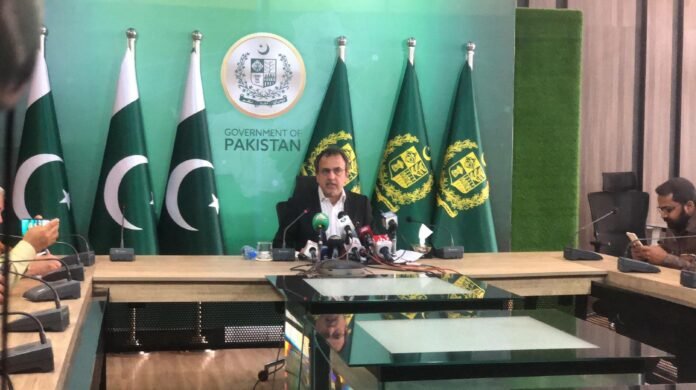
Pakistan’s growing local power mix has made it less vulnerable to global liquefied natural gas (LNG) supply disruptions, Federal Minister for Power Awais Ahmad Khan Leghari said in an interview with Reuters.
Speaking in Islamabad, the minister said around 74 percent of Pakistan’s electricity generation now comes from local sources, including solar, wind, nuclear, hydropower, and coal. The government aims to raise that share to more than 96 percent by 2034, further strengthening the country’s energy security.
Leghari noted that a rapid expansion in rooftop solar installations, along with earlier investments in hydropower, nuclear energy, and domestic coal, has played a major role in reducing dependence on imported fuels.
Limited LNG Exposure
Despite global uncertainty, LNG currently accounts for about 10 percent of Pakistan’s electricity generation, mainly used to meet peak demand during evening hours and support grid stability.
The comments come as tensions in the Middle East threaten LNG shipments from Qatar, the world’s second-largest LNG exporter after the United States and Pakistan’s main supplier of the fuel.
Leghari said Pakistan’s power sector would face minimal impact on industry or agriculture even if LNG supplies were disrupted or became too expensive. However, a prolonged interruption could still affect electricity availability during the summer peak when air-conditioning demand surges.
“In a worst-case scenario, if LNG cargoes stopped for several months, Pakistan might experience one to two hours of load shedding during peak summer evenings,” he said, adding that any outages would likely affect limited urban and rural areas rather than industrial consumers.
Power Surplus but Grid Challenges
Pakistan has historically struggled with electricity shortages and frequent load shedding. However, significant additions of coal, LNG, and nuclear plants in recent years have created surplus generation capacity.
Demand growth has slowed while rooftop solar adoption has surged, sometimes exceeding grid demand in certain areas during daytime hours.
Leghari said current power outages in parts of the country are mainly caused by transmission losses, electricity theft, and financial constraints, rather than a shortage of electricity supply.
Solar Expansion Reshaping Demand
According to the minister, rooftop solar installations across Pakistan have grown to more than 20 gigawatts, with behind-the-meter capacity estimated between 12 and 14 gigawatts, and possibly reaching 18 gigawatts.
This rapid expansion has significantly reduced daytime electricity demand from the national grid.
Hydropower also provides seasonal support to the system. During summer, higher river flows can add up to 7,000 megawatts of additional generation capacity, helping meet rising cooling demand.
Future Focus on Local and Clean Energy
Leghari said the government plans to prioritize indigenous and clean energy sources over the next six to eight years to further improve energy security.
Currently, around 55 percent of Pakistan’s electricity generation comes from clean sources, including hydropower and nuclear energy. The government aims to increase that share to over 90 percent by 2034.
Pakistan has already started adjusting its LNG procurement strategy as domestic power capacity expands. The country recently cancelled 21 LNG cargoes scheduled for delivery in 2026–27 under a long-term contract with Eni due to reduced gas demand driven by solar growth.
The minister said future energy investments will continue to focus on locally available and low-carbon power sources to ensure long-term supply stability and reduce reliance on imported fuels.