



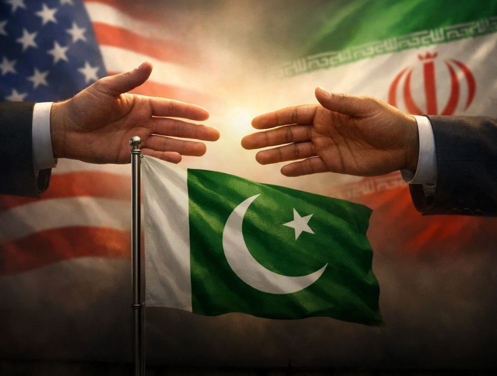
Pakistan has reportedly presented a proposed ceasefire framework aimed at halting the escalating conflict involving the United States, Israel, and Iran, with diplomatic sources referring to the initiative as the “Islamabad Accord.”
According to reports, the proposal was conveyed overnight to both Washington and Tehran and outlines a two-phase roadmap designed to immediately de-escalate tensions while paving the way for a broader political settlement.
Immediate Ceasefire, Followed by Wider Deal
The first phase of the framework calls for an instant ceasefire, while the second stage envisions negotiations toward a comprehensive agreement within days. If accepted, the plan could potentially take effect as early as Monday.
A key component of the proposal includes reopening the Strait of Hormuz, a vital global energy corridor that has remained under intense scrutiny amid rising security and market fears linked to the conflict.
Diplomatic sources indicated that all major elements of the arrangement would need simultaneous approval from the involved parties. The initial understanding is expected to be formalized through a memorandum of understanding (MoU), finalized electronically through Pakistan, which is reportedly serving as the primary communication bridge between the sides.
Intensive Overnight Diplomacy
Reports suggest that Field Marshal Asim Munir remained engaged in continuous consultations overnight with US Vice President JD Vance, US Special Envoy Steve Witkoff, and Iranian Foreign Minister Abbas Araqchi as negotiations intensified to secure consensus on the framework.
Under the proposed timeline, an immediate ceasefire would be followed by a 15–20 day negotiation window aimed at reaching a wider settlement. If progress continues, final face-to-face talks are expected to take place in Islamabad.
Nuclear Assurances and Sanctions Relief
The broader agreement is also expected to address Iran’s nuclear program. According to the reported framework, Tehran could provide assurances regarding its nuclear activities in exchange for sanctions relief and the release of frozen financial assets.
However, there has been no confirmation that Iran has formally accepted the proposal. Pakistani sources say Tehran has received the plan but has yet to commit, despite intensified diplomatic outreach through both civilian and military channels.
Iranian officials have previously emphasized that any ceasefire must be permanent and include guarantees against future attacks by the United States or Israel. Reports indicate Iran has simultaneously received mediation messages from Pakistan, Turkey, and Egypt.
Silence From Washington and Tehran
Neither US nor Iranian officials have issued immediate public responses to the reported initiative. Pakistan’s Foreign Office spokesperson Tahir Andrabi also declined to comment on the framework.
The diplomatic push comes amid mounting global concern over potential disruptions to the Strait of Hormuz, through which a significant share of the world’s oil supply passes. Continued instability in the region has already triggered volatility in international energy markets.
US President Donald Trump has recently urged a swift end to hostilities, warning of consequences if a ceasefire is not achieved soon.
If successful, the Islamabad Accord could position Pakistan at the center of one of the most consequential diplomatic mediation efforts tied to the current Middle East crisis.