




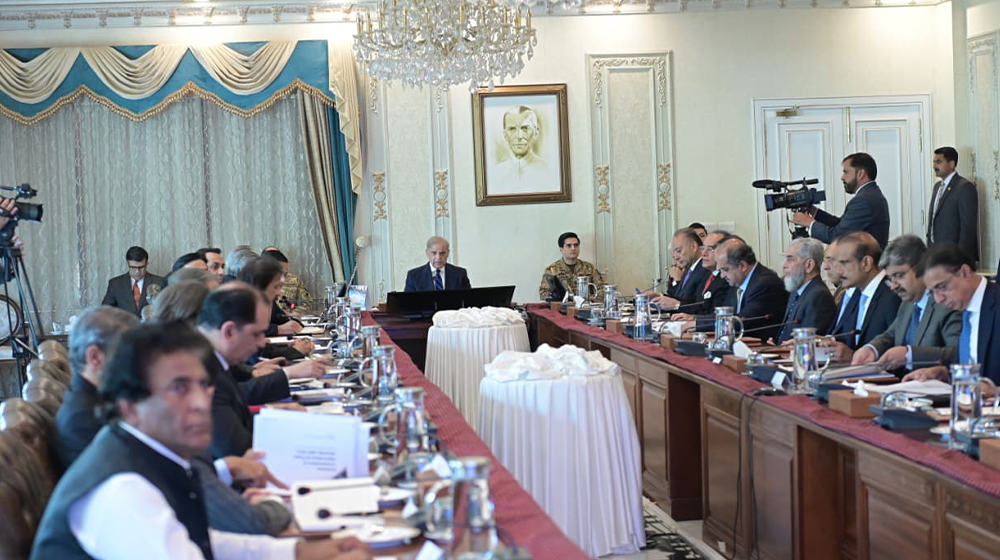
Prime Minister Shehbaz Sharif has directed authorities to urgently scale up the supply of essential food items to Gulf countries while ensuring that domestic needs are fully protected.
Chairing a high-level review meeting in Islamabad on the country’s maritime operations and export strategy, the prime minister emphasized that Pakistan must support Gulf nations in meeting their food requirements, particularly at a time when global supply chains are under pressure.
He expressed satisfaction over the progress made so far and appreciated the efforts of the relevant departments involved in implementing the export plan. He also instructed officials to maintain close coordination with Gulf countries to ensure smooth and continuous supply of food products.
The prime minister stressed that surplus food items should be exported at a faster pace, but without compromising the availability of essential goods for local consumers. He also ordered strict monitoring of food supply and demand within the country to avoid any shortages.
Highlighting the need for efficiency, he warned that delays in decision-making would not be tolerated and directed that accountability measures be enforced where necessary.
To support increased exports, the prime minister called for a comprehensive strategy to enhance flight operations at major airports, including those in Karachi and Gwadar, along with other key international hubs.
Officials briefed the meeting that a special committee has approved the export of 40 food items to Gulf markets, including rice, edible oil, sugar, meat, poultry, dairy products, fruits, and vegetables.
A database of exporters has also been developed to streamline trade processes. Authorities confirmed that no additional charges will be imposed on the export of key agricultural products, while shipments will be facilitated through both air and sea routes. Efforts are also underway to strengthen business links through meetings and virtual engagements with Gulf partners.
The meeting was informed that port operations at Port of Karachi and Port Qasim remained fully operational even during holiday periods.
To further improve efficiency, transshipment handling has been expanded to off-dock terminals following regulatory changes. Transportation costs at ports have been reduced by up to 60%, and dedicated export facilitation desks have been established to assist traders.
Additionally, vessels carrying crude oil are being given priority berthing to ensure uninterrupted energy supplies.
Senior federal ministers and officials attended the meeting, reflecting the government’s focus on strengthening trade ties and expanding export opportunities in the region.