



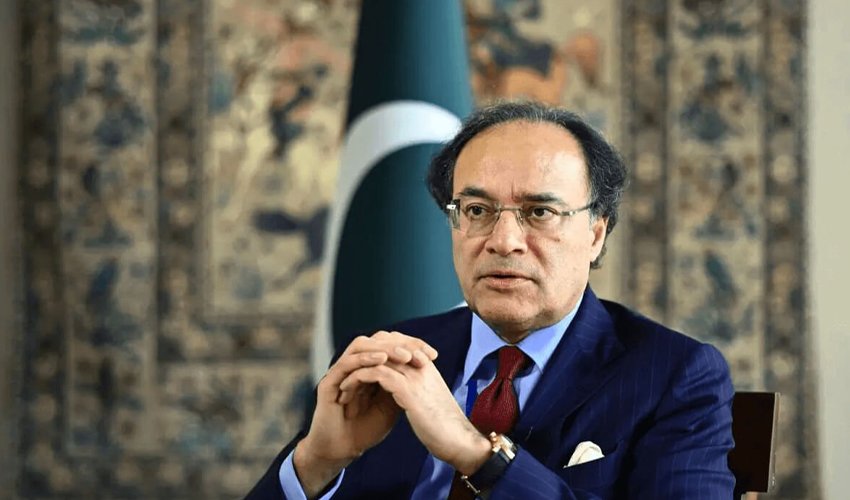
Pakistan has finalized agreements for a $1 billion loan with two Middle Eastern financial institutions, Finance Minister Muhammad Aurangzeb announced during the World Economic Forum in Davos. The loans, which carry an interest rate of 6%-7%, are short-term arrangements with a maturity of up to one year.
The agreements include a bilateral loan and a trade financing facility, as the country works to strengthen its financial reserves. This move is part of a broader plan to secure up to $4 billion from Middle Eastern commercial banks by the next fiscal year, a target previously outlined by Pakistan’s central bank.
Aurangzeb also expressed optimism about improving Pakistan’s credit ratings, which remain in “junk” territory despite recent upgrades. He revealed that discussions with rating agencies are ongoing to achieve a single B rating, with hopes for an upgrade before the fiscal year ends in June.
In 2023, Moody’s upgraded Pakistan’s rating to ‘Caa2,’ citing improved macroeconomic conditions, while Fitch raised its rating to CCC+ following an agreement with the International Monetary Fund (IMF). However, both ratings remain below investment grade.
IMF Review and Climate Financing
Pakistan is preparing for the first review of its $7 billion IMF Extended Fund Facility (EFF), scheduled for late February. The EFF, secured in September 2024, is designed to address medium-term balance of payments challenges caused by structural economic weaknesses. Aurangzeb expressed confidence in meeting the IMF’s requirements for the review.
In addition, Pakistan has requested $1 billion in funding from the IMF’s Resilience and Sustainability Trust (RST), which supports climate-related initiatives such as clean energy transitions and climate adaptation. Discussions on RST financing are expected to progress during the February IMF review, with Aurangzeb hopeful of finalizing the arrangement within six to nine months. He emphasized Pakistan’s vulnerability to climate change, as highlighted by the Global Climate Risk Index.
Efforts to privatize Pakistan International Airlines (PIA) are also underway, with Aurangzeb optimistic about achieving a resolution within the next five to six months. A previous attempt to sell a 60% stake in the debt-ridden airline failed last year. However, the recent lifting of a 4.5-year ban by the EU aviation regulator has improved PIA’s business prospects, with flights to Europe resuming this month