



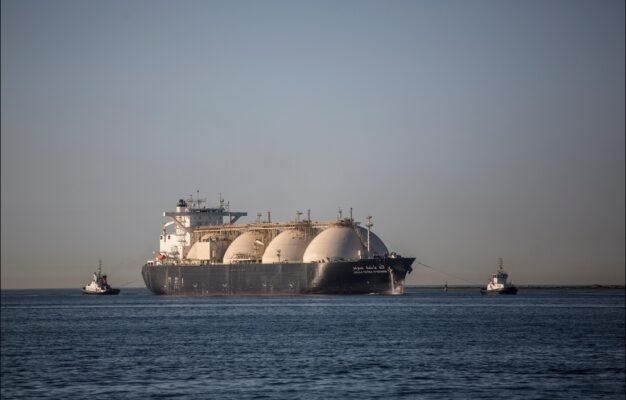
Liquefied natural gas (LNG) supplies for power generation are currently unavailable under force majeure conditions, government officials informed the National Electric Power Regulatory Authority (Nepra) during a public hearing, raising concerns about potential pressure on the country’s energy supply amid regional geopolitical tensions.
Officials said LNG deliveries could not be utilised for electricity generation due to circumstances beyond the control of contracting parties. However, they assured the regulator that imported coal supplies — mainly sourced from South Africa and Indonesia — remain unaffected and are continuing to support power generation.
LNG-based power plants account for more than 4,500 megawatts of installed generation capacity in the national grid and are among the most efficient thermal power units in the country.
Officials linked the disruption to escalating tensions in the Middle East following the ongoing conflict involving the United States, Israel and Iran, which has drawn Gulf countries into the crisis and triggered uncertainty in global fuel supplies. Shipping disruptions through the Strait of Hormuz, a key route for a significant portion of global LNG and seaborne oil trade, have further worsened the situation.
They also pointed to production stoppages in Qatar, a major global LNG exporter, after a force majeure declaration earlier this month that halted supplies from facilities accounting for a substantial share of global LNG output.
Responding to queries during the hearing, Central Power Purchasing Agency (CPPA) Chief Executive Officer Rehan Akhtar said coal-fired plants continue to receive imported fuel, although some transportation-related issues persist for the Sahiwal and Jamshoro power plants. He said the Power Division and relevant agencies were working to maintain adequate inventories and ensure maximum plant availability.
Officials also sought to reassure consumers regarding electricity tariffs, saying fuel cost adjustments (FCA) for April are expected to remain largely unchanged. A Rs. 1.64 per unit positive FCA for February consumption will replace the earlier Rs. 1.63 per unit adjustment charged in March bills.
Meanwhile, Power Planning and Monitoring Company (PPMC) Chief Financial Officer Naveed Qaiser told the hearing that the government was preparing a tariff package aimed at encouraging greater utilisation of cheaper electricity available during daytime hours, particularly when solar generation is higher.
Industrial consumers urged the regulator to recommend introduction of a fixed, all-inclusive electricity tariff capped at nine US cents per kilowatt-hour for at least five years to improve export competitiveness and reduce uncertainty in energy costs.
Officials further informed the hearing that electricity supplied from the national grid to K-Electric helped avoid a potential Rs. 4.08 per unit increase in fuel cost adjustments for February consumption, while additional quarterly tariff revisions were expected to provide further relief.
They also said the power sector’s circular debt is projected to remain below Rs. 1.69 trillion by the end of the current fiscal year, compared with about Rs. 2.4 trillion in the same period last year, reflecting improvements supported by subsidy payments and tariff reforms.
Despite global fuel price volatility, the government provided cumulative consumer relief of Rs. 46.56 billion during the first eight months of the current fiscal year, resulting in a reduction of around Rs. 0.71 per unit in consumer-end tariffs, officials added.
Industrial electricity tariffs have also declined significantly over the past two years, falling from Rs. 49.19 per unit in March 2024 to Rs. 34.75 per unit in March 2026. Officials said incentive pricing packages contributed to a 25 percent increase in industrial electricity consumption and 7 percent growth in agriculture-sector demand.