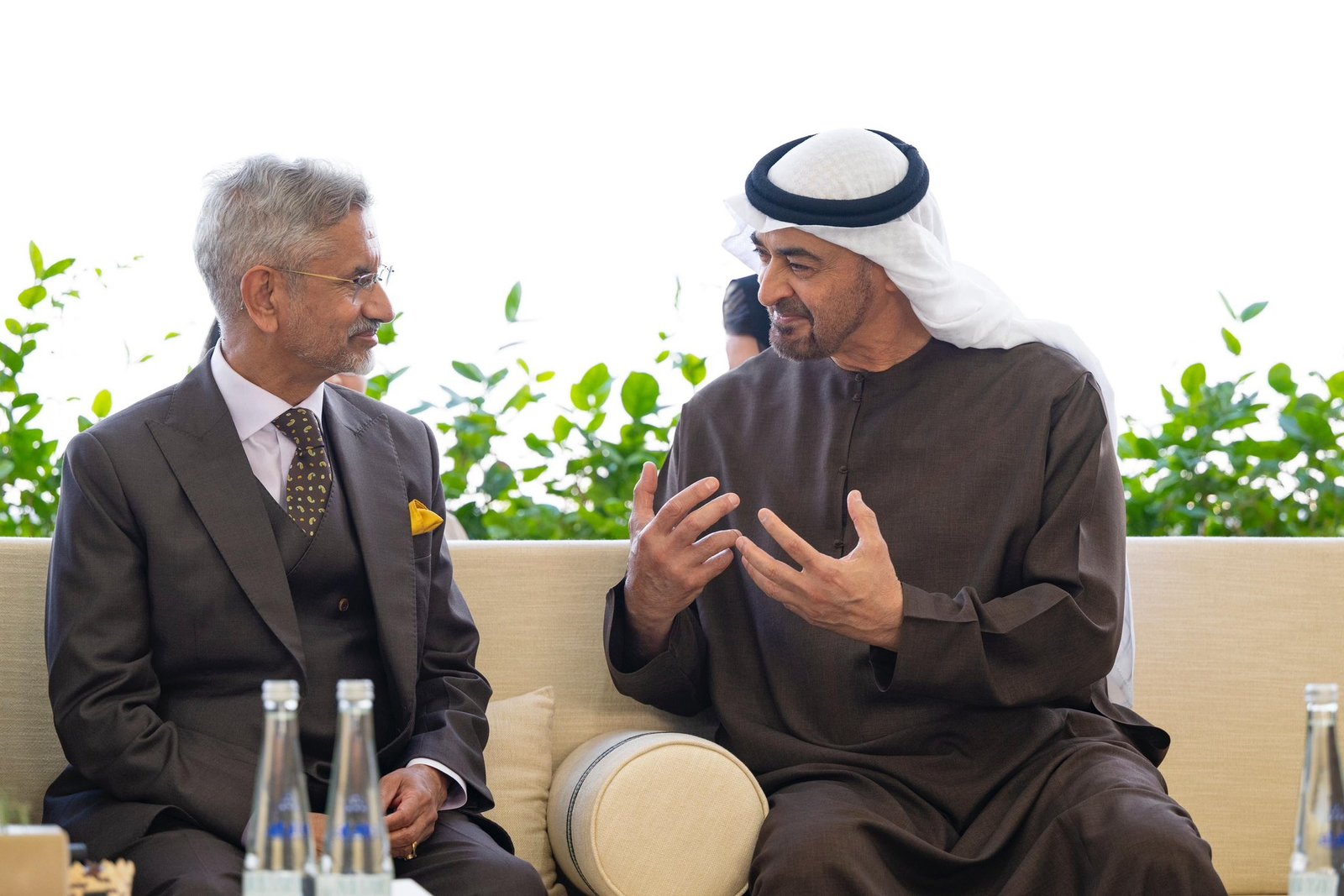
India appears to be stepping up regional diplomacy efforts as high-stakes US-Iran negotiations unfolded in Islamabad — talks in which New Delhi had no formal role.
India’s External Affairs Minister Subrahmanyam Jaishankar on Sunday announced a high-profile meeting in Abu Dhabi with UAE President Mohamed bin Zayed Al Nahyan, describing the visit as an opportunity to strengthen the India-UAE Comprehensive Strategic Partnership and thanking the Emirati leadership for safeguarding the Indian diaspora during ongoing tensions in West Asia.
In a public statement shared after the meeting, Jaishankar conveyed greetings from Indian Prime Minister Narendra Modi and emphasised cooperation with the Gulf state amid regional instability.
The diplomatic outreach comes at a sensitive moment. Islamabad recently emerged as a key venue for indirect contacts between Washington and Tehran, positioning Pakistan as a facilitator in one of the most consequential geopolitical negotiations in the region. India, despite its economic ties with the Gulf and longstanding relations with Iran, was not invited to participate in or mediate the discussions.
Analysts say New Delhi’s intensified engagement with Gulf leadership reflects an effort to remain diplomatically visible while regional power dynamics evolve without Indian involvement.
India maintains deep energy, trade and diaspora links across the Middle East, particularly with the United Arab Emirates, one of its largest trading partners and a crucial source of investment and remittances.
By highlighting cooperation with Abu Dhabi during a period of geopolitical uncertainty, Indian officials appear keen to underline their continued relevance in regional affairs.
While Indian authorities framed the Abu Dhabi visit as part of routine strategic engagement, its timing — coinciding with Islamabad’s growing diplomatic profile — has drawn attention among observers tracking shifting alliances in West Asia diplomacy.
Background
The renewed focus on regional diplomacy follows ongoing attempts by the United States and Iran to ease tensions linked to sanctions, maritime security and regional conflicts. Pakistan’s role as a host or facilitator has elevated Islamabad’s diplomatic standing, particularly as Gulf states and global powers search for channels to prevent escalation.
India historically maintained strong relations with Iran, especially through energy cooperation and connectivity projects such as the Chabahar port initiative. However, US sanctions on Tehran in recent years forced New Delhi to scale back engagement, creating space for other regional actors to assume more visible diplomatic roles.
At the same time, India has deepened strategic ties with Gulf monarchies, especially the UAE and Saudi Arabia, focusing on trade corridors, investment partnerships and diaspora security.