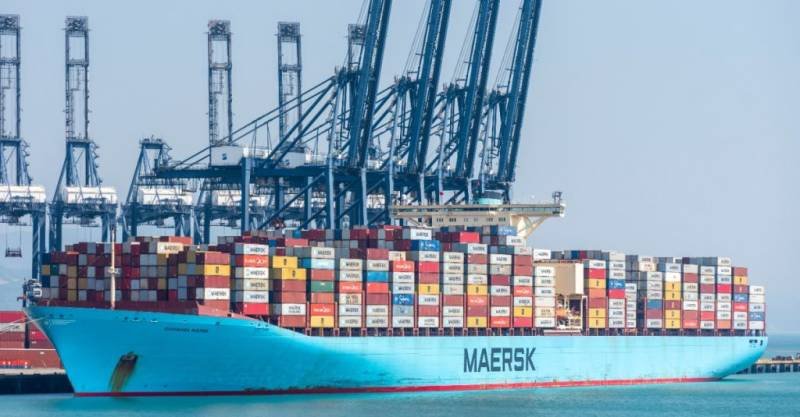
Global shipping leader Maersk has announced an increase in its Emergency Contingency Surcharge (ECS) for cargo moving from Pakistan and the broader Indian Subcontinent to West Africa, a move that is expected to raise logistics costs for exporters in the coming months.
The revised surcharge will apply from the Price Calculation Date (PCD) of April 1, 2026, and will primarily affect shipments along the West Africa (W2MW) trade route.
The development comes amid ongoing disruptions to traditional shipping lanes, with vessels increasingly avoiding the Strait of Hormuz and taking longer alternative routes. This shift has contributed to higher operational costs and extended transit times for cargo departing from ports near Karachi.
Impact on Pakistani Exporters
The surcharge increase is likely to directly affect Pakistani exporters, particularly those dealing in textiles, rice, and leather goods destined for key West African markets such as Nigeria and Ghana.
Higher freight charges could squeeze margins for businesses already facing cost pressures and uncertain global demand. Exporters may be forced to either absorb the additional expense or pass it on to buyers, potentially affecting competitiveness.
Competitiveness at Risk
Industry participants warn that rising shipping costs could weaken Pakistan’s position in price-sensitive African markets. If logistics expenses continue to climb, Pakistani goods may struggle to compete with exports from regional rivals offering lower landed costs.
Some exporters may consider switching shipping lines or adjusting routes to manage expenses, though such changes could result in longer delivery times and added complexity.
Underlying Factors
While Maersk has not specified the exact reasons for the surcharge revision, such adjustments are typically driven by a mix of operational risks, fluctuating fuel prices, and route-related challenges.
Analysts note that prolonged disruptions in key maritime corridors could continue to push freight rates higher, posing a risk to Pakistan’s export momentum—particularly in emerging markets where pricing remains a critical factor.