



The US dollar’s share of global foreign exchange reserves has fallen to its lowest level this century, according to the latest Currency Composition of Official Foreign Exchange Reserves (COFER) data released by the International Monetary Fund (IMF) for the fourth quarter of 2025.
At 56.8 percent, the dollar’s share is the lowest since 1994, a drop from nearly 71 percent in 2001, reflecting a gradual long-term trend of diversification among central banks worldwide.
Despite the decline, the dollar remains the dominant reserve currency. No single currency has replaced it, with central banks instead spreading allocations across multiple alternatives. The euro now accounts for approximately 20–21 percent, while smaller gains are seen in the Japanese yen, British pound, Chinese yuan, and commodity-linked currencies such as the Canadian and Australian dollars, as well as the Swiss franc.
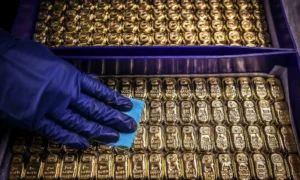
A notable shift has also occurred outside traditional currency holdings. Central banks have significantly increased gold reserves, which, while not classified as foreign currency, have become a key tool for diversification. Official purchases have exceeded 1,000 tonnes annually for three consecutive years, an unprecedented trend.
Some analysts link this acceleration to the freezing of roughly $300 billion in Russian central bank reserves in 2022, which prompted other countries to reassess their reliance on the dollar.
Economists emphasize that this is not a sudden collapse of dollar dominance but rather a slow transition toward a more diversified, multipolar reserve system, with multiple currencies and gold collectively gaining ground.