




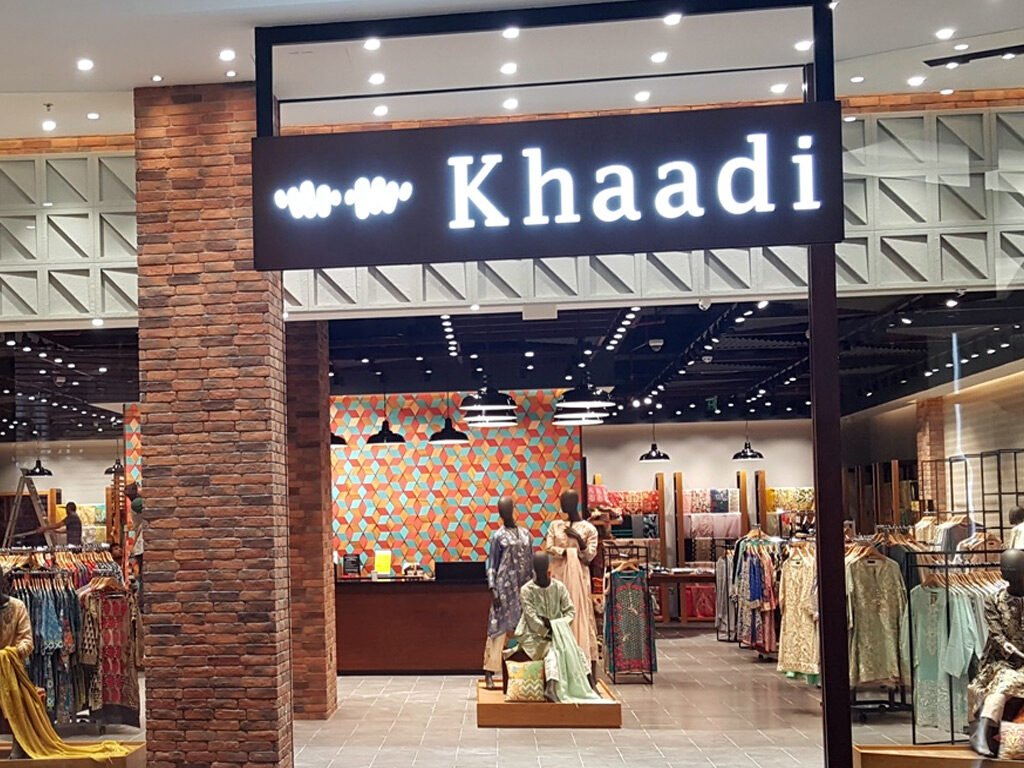
The Securities and Exchange Commission of Pakistan (SECP) has sought additional information from Khaadi ahead of its proposed listing on the Pakistan Stock Exchange (PSX), asking the company to clarify its business operations, financial position and share valuation.
Sources said Khaadi representatives recently met SECP officials to discuss the proposed initial public offering (IPO). During the meeting, the regulator sought details about Khaadi International’s franchise operations and experiential stores established in different cities.
The SECP also questioned the face value of Khaadi’s shares and asked the company to explain how it had determined the proposed value.
The company’s financial statements and draft prospectus have also drawn attention to several areas requiring further clarification, particularly its reported losses, property valuations and transactions with related companies.
Khaadi’s audited accounts for December 2025 reportedly show a loss of around Rs. 1.5 billion. Gains from the revaluation of properties appear to have helped offset the impact of these losses.
However, property valuation gains do not represent cash earned through selling products or operating stores. Investors therefore need a clear picture of the company’s actual business performance and operating results.
The draft prospectus reportedly does not provide the complete property valuation report or sufficient details about the assumptions used to determine the revised asset values.
There is also a significant difference between the fair-value gains recorded in the 2024 and 2025 accounts. The 2024 financial statements reportedly showed gains of around Rs. 1 million, and the company needs to explain the subsequent increase.
Questions have also emerged over the valuation of Khaadi’s intellectual property rights, including the assumptions used by GT and the basis for determining the share premium. The relevant valuation reports and supporting details would help investors assess these figures.
Khaadi’s expansion plans require further explanation as well. The draft prospectus reportedly does not specify the expected cost of establishing individual outlets, projected revenue from each new store or the actual revenue generated by outlets opened during the first half of 2026.
Without these figures, investors may find it difficult to assess the financial viability of the company’s expansion strategy and its expected returns.
Another area requiring clarity is the use of IPO proceeds and the protection of minority shareholders.
The prospectus should clearly explain how the company intends to spend the funds raised through the listing and what safeguards would apply if the sponsors decide to change the stated allocation.
This is particularly relevant because the sponsors reportedly hold substantial voting power, which could allow them to influence or pass certain shareholder resolutions without significant opposition from smaller investors.
The proposed disclosures should also explain what options would be available to minority shareholders if the sponsors fail to meet their commitments or use IPO proceeds for purposes different from those outlined in the prospectus.
A separate issue concerns Khaadi’s reported purchase of certain rights from its parent company for approximately Rs. 8 billion.
The draft prospectus reportedly provides limited information about the agreement and how the transaction price was determined. It refers to a valuation conducted by GT, while the audited accounts describe the transaction as having been negotiated between the parties.
The company needs to clarify the difference and disclose the valuation methodology, assumptions and respective roles of the parties involved.
The ownership structure of the experiential stores has also attracted attention. The parent company reportedly holds the relevant rights, while a related company is described as dormant.
Investors need a clear explanation of why Khaadi is paying a substantial amount upfront to acquire these rights and what commercial benefits it expects from the transaction.
Alternative arrangements, including a joint venture in which Khaadi contributes funding and the parent company contributes the relevant rights, could also be considered if commercially and legally feasible.
Without the underlying agreement, independent valuation and projected financial benefits, investors cannot properly assess whether the Rs. 8 billion transaction serves the interests of Khaadi and its future public shareholders.
The additional disclosures are important for investors to evaluate the company’s financial health, business expansion plans, related-party transactions and proposed use of IPO proceeds before the shares are offered to the public.