




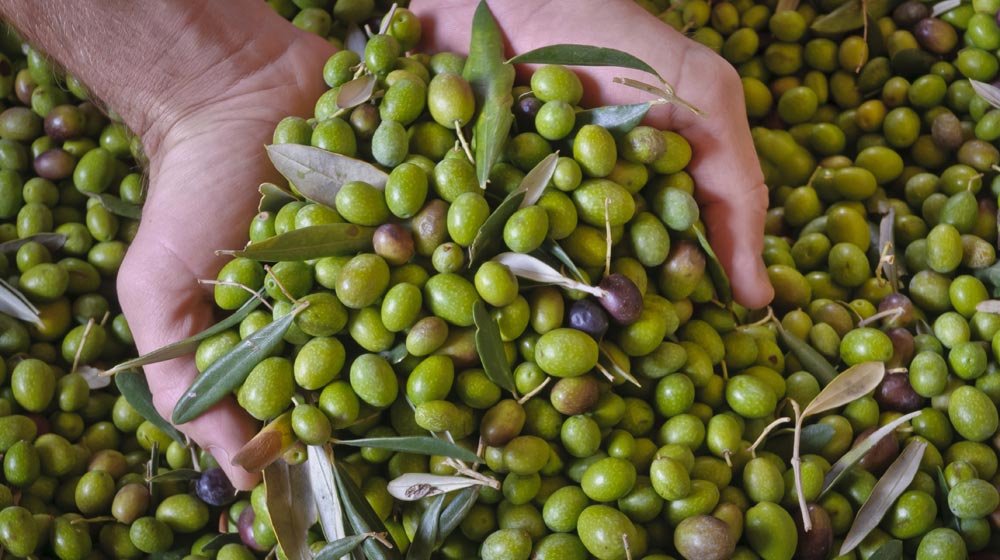
Pakistan’s olive oil production is expected to reach nearly 716 tons in 2026, marking a significant increase from just 19 kilograms in 2016. However, the country still faces major challenges in turning its growing olive sector into a commercially viable industry, including limited processing capacity, weak branding, high investment costs, and consumer preference for imported products.
According to a government survey seen by RBN, Pakistan’s olive fruit production is estimated at 7,412 tons this year, reflecting the expansion of cultivation and processing infrastructure over the past decade.
Pakistan’s efforts to develop a domestic olive industry date back to 1986, when the Pakistan Agricultural Research Council (PARC), in collaboration with the Italian government, began introducing olive cultivation and studying suitable farming practices. In the early 2000s, researchers also started working on wild olive species to develop fruit-bearing varieties.
A five-year project launched following a debt swap agreement with Italy in 2006 sought to combine olive cultivation with rural economic development. The project was later transferred to PARC following the devolution of the Post Harvest Research Centre and Olive Development Board and was completed in 2012. Subsequent government initiatives focused on expanding plantations, improving extraction facilities, and supporting commercial production.
Pakistan Plants 7.6 Million Olive Trees
Pakistan has planted approximately 7.64 million olive trees across 60,456 acres in 131 districts, according to the government survey.
Balochistan accounts for the largest share, with 3.20 million plants across 24,620 acres in 31 districts. Punjab follows with 2.24 million plants across 17,000 acres, while Khyber Pakhtunkhwa has 1.66 million plants spread over 14,690 acres.
The remaining plantations include 205,929 plants in Azad Jammu and Kashmir, 117,958 in Islamabad Capital Territory, 92,296 in Gilgit-Baltistan, and 129,384 in Sindh.
The government aims to expand the country’s olive cultivation area to 100,000 acres and increase the number of trees to 10 million by 2030. Under the National Olive Value Chain Policy 2024-2030, authorities have supported plantation through free sapling distribution and subsidies of more than 67% on plants and drip irrigation systems.
The government has also established the Pakistan Olive and Olive Oil Council under the Pakistan Oilseed Board to bring farmers, processors, and public-sector institutions together. Another initiative is PakOlive, a national certification trademark intended to identify olive oil that meets prescribed quality standards.
Olive Oil Exports Rise 27-Fold
Pakistan’s olive oil exports have increased sharply, rising from just 9 tons in 2020 to 249 tons in 2025, a nearly 27-fold increase in five years.
Meanwhile, olive oil imports declined by approximately 33% from their 2021 peak of 4,479 tons to 2,996 tons in 2025.
The government estimates that Pakistan has around 4 million hectares of land suitable for olive cultivation, alongside millions of wild olive plants. Olives can grow in different agro-ecological conditions, including rain-fed areas and marginal or degraded land, reducing competition with crops that require more productive farmland and water.
The country has also established 51 olive oil extraction units. Balochistan has 23 units, followed by Khyber Pakhtunkhwa with 16, Punjab with nine, Islamabad with two, and Azad Jammu and Kashmir with one.
Supporting facilities include three value-addition laboratories, six fruit-processing units, five weather stations, nursery tunnels, and a national reference laboratory. These facilities are intended to support the sector beyond cultivation through processing, research, and quality control.
At a recent media briefing for PAC Agri Connections 2026, RBN learned that Italian delegates who visited Pakistan had praised the quality of olive oil produced in Balochistan.
Industry information shared with RBN suggests that Balochistan’s olives can yield around 18 kilograms of oil per 100 kilograms of fruit, compared with an estimated 12 to 14 kilograms in many other producing regions. If consistently achieved at commercial scale, this yield could strengthen the competitiveness of locally produced olive oil.
Why Pakistani Olive Oil Is Missing From Store Shelves
Despite rising production and exports, locally produced olive oil has yet to establish a strong presence in the domestic retail market. Limited economies of scale, weak distribution networks, and an underdeveloped value chain continue to restrict its reach.
“The primary bottleneck is branding, packaging, and marketing because most of our farmers are not equipped in that area, and there is no corporate involvement for now. Production numbers are still modest, but they are growing, and Olive Oil is the future of Pakistan,” Awais Khan, CEO of the National Alliance for Safe Food, told RBN.
Khan added that the government has a broader plan to promote self-sufficiency in edible oils and reduce reliance on imports, including through sesame and other oilseed crops.
The potential market also extends beyond cooking oil. Olive-based products include table olives, spreads, personal care items, health supplements, olive leaf tea, and by-products used in animal feed and biomass fuel.
However, traditional food products continue to dominate consumer demand. The Pakistan Olives Market Study found that olive oil accounted for 50% to 56% of regular consumption, followed by table olives at 32% to 39%. Olive-based personal care products accounted for the remaining 11% to 12%.
In imported retail sales, olive oil represented 68% of the market, table olives 30%, and olive spreads and care products 2%.
High Costs and Consumer Preferences Remain Major Hurdles
A 2023 study of Pakistan’s domestic olive oil market, conducted under the Growth for Rural Advancement and Sustainable Progress project, found that 74% of consumers preferred imported olive oil, while only 26% favoured locally produced alternatives. It also found that three out of every four olive oil products available in retail outlets were imported.
The findings point to persistent concerns about processing standards, quality certification, and the perception that imported products offer better flavour and variety.
Price is another major barrier. The study found that 73% of consumers considered price very important, while 71% placed significant importance on brand reputation. Local producers must therefore compete not only on quality but also on affordability, packaging, and consumer trust.
Olive oil accounts for only around 0.3% of Pakistan’s edible oil imports, according to the study. Its relatively high price and the perception that it is unsuitable for high-temperature cooking have also limited wider adoption.
Other challenges include inadequate testing facilities, inconsistent pricing, limited commercial investment in value-added products, insufficient harvesting equipment, gaps in extraction infrastructure, and poor packaging.
Long Payback Period Could Slow Expansion
The investment required to establish commercial olive plantations presents another challenge. Government policy documents indicate that olive trees generally do not produce fruit or generate financial returns during their first four years. The break-even period can extend to nearly 10 years.
This long investment horizon makes sustained financing essential, particularly in areas where farmers have limited access to agricultural extension services and technical guidance.
Government development projects typically operate within fixed five-year funding cycles. If support ends before plantations reach full commercial production, farmers may struggle to maintain momentum and realise the expected returns.
Security conditions in Balochistan and Khyber Pakhtunkhwa also warrant attention because these provinces account for much of Pakistan’s olive cultivation. Uncertainty in these regions could affect investment decisions, infrastructure development, and the long-term expansion of the industry.
Pakistan’s olive sector has made considerable progress, moving from experimental production to hundreds of tons of annual output and rapidly growing exports. Yet, higher production alone will not establish a competitive domestic industry.
The next phase will depend on sustained investment, reliable processing and certification facilities, stronger branding and distribution, and a commercially viable market for locally produced olive oil. Without these elements, the country risks expanding cultivation faster than its ability to sell the resulting products profitably.