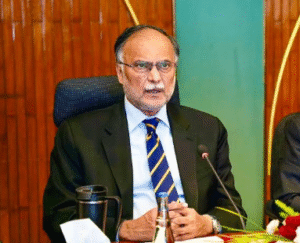





Pakistan’s banks have approved more than Rs. 400 billion in affordable housing finance, but only around Rs. 76 billion, or roughly 19 percent, has reached first-time homebuyers, Finance Minister Muhammad Aurangzeb said on October 7.
Speaking virtually at the Pakistan Microfinance Network’s 10th annual microfinance conference, Aurangzeb said expanding access to finance was one of the government’s six key priorities. The other priorities include economic stability, sustainable growth, structural reforms, trade and investment, and the new economy.
The finance minister said Pakistan had made substantial progress toward economic stability over the past two and a half years. The country’s combined fiscal and current account deficits had declined from a peak of around 12.5 percent of gross domestic product to 2.6 percent by the end of the last fiscal year.
He said foreign exchange reserves had also reached $21.4 billion, enough to cover nearly three months of imports.
Aurangzeb said Pakistan’s sovereign credit rating had been upgraded three times since April 2025. He also highlighted the country’s successful $3 billion Eurobond issuance, which marked Pakistan’s return to international capital markets, with participation from investors across Asia, the Middle East, Europe and the United States.
According to the finance minister, the economy grew by 3.7 percent in the last fiscal year after contracting three years earlier, while growth of more than 4 percent is expected during the current fiscal year.
He stressed that Pakistan needs to maintain economic stability and pursue sustainable and responsible growth instead of relying on consumption-led expansion. Taxation, energy, state-owned enterprises, privatization and public finances remain key areas for structural reforms.
Aurangzeb also highlighted the government’s efforts to increase the private sector’s role in the economy. He pointed to a joint bid of around $1.2 billion by two major domestic investor groups for Pakistan International Airlines as evidence of stronger private sector confidence.
He added that international interest in the privatization of power distribution companies was also growing, with three Turkish companies expressing interest in the first distribution company offered for privatization.
Pakistan is also moving from an aid-focused model toward greater reliance on trade and investment, Aurangzeb said, emphasizing the importance of stronger commercial ties with bilateral partners.
He also stressed the need to prepare for emerging technologies, including artificial intelligence, blockchain and Web3. Pakistani freelancers earned $1.6 billion from IT services exports during the last fiscal year, he said, adding that better skills and training would be needed to move workers into higher-value digital services.
On financial inclusion, Aurangzeb said around Rs. 6 billion had been approved and more than Rs. 2 billion disbursed through a digital, collateral-free financing scheme for small farmers over the previous seven to eight months.
He called for closer cooperation between commercial banks and microfinance institutions to expand financing for small and medium-sized enterprises, agriculture and affordable housing.
The finance minister urged microfinance institutions to expand digital lending, improve customer experience and develop stronger credit-scoring systems. Lending decisions, he said, should increasingly incorporate alternative data and digital credit assessments instead of depending primarily on collateral.
He said lenders should consider borrowers’ repayment capacity, seasonal income patterns and affordability when making credit decisions.
Aurangzeb also called for the impact of lending to be measured beyond the total number or value of loans issued. The sector should focus on increasing the number of first-time borrowers in agriculture and small businesses, helping smaller businesses expand, creating jobs and improving women’s participation in economic activity.
The finance minister said the export refinance limit had been increased from Rs. 1 trillion to Rs. 1.5 trillion, with 20 percent of the additional limit reserved for small and medium-sized enterprises.
He added that businesses connected to the value and supply chains of major exporters would be able to access financing at a special rate of 4.5 percent.
Aurangzeb said increasing participation by women entrepreneurs was also important for broader financial inclusion and sustainable livelihoods. He expressed hope that discussions at the conference would help strengthen the microfinance sector and widen access to financial services across Pakistan.