



Pakistan and the International Monetary Fund (IMF) remain at odds over the rupee and interest rate policy as discussions on the country’s latest economic review continue.
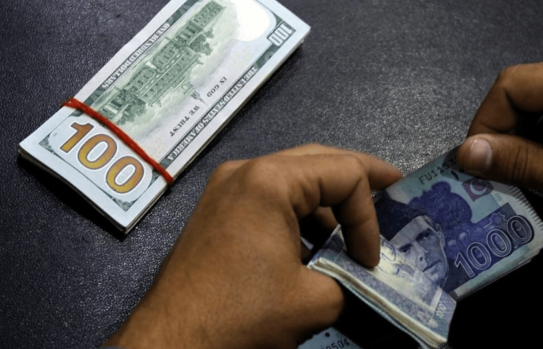
Pakistan’s economic team has argued for exchange rate stability, while the IMF is pushing for a market-based exchange rate and sufficiently tight monetary policy to keep inflation under control.
The government told the Fund that the economic outlook remains stable and maintained its 4 percent growth target despite risks linked to the ongoing Middle East conflict.
Officials expect inflation to average around 7.5 percent during the current fiscal year and gradually ease after December.
Pakistan’s authorities also said they expect the rupee to remain stable, with no immediate depreciation planned. They argued that exchange rate stability would help limit imported inflation.
However, differences over the exchange rate and monetary policy remain part of the IMF discussions.
The IMF mission has stressed that the exchange rate should be determined by market conditions and that monetary policy should remain tight enough to contain inflation. The State Bank of Pakistan has told the Fund that its current 11.5 percent policy rate remains appropriate.
Pakistan expects inflation to stay within a 7 percent to 8 percent range during the fiscal year. Officials estimate inflation at around 7.5 percent if global oil prices remain near $80 per barrel. A rise in oil prices to $100 per barrel could push inflation to about 8.2 percent.
The economic team expects the current account deficit to range between $2.5 billion and $3 billion. Exports are projected at around $34 billion, while remittances are estimated at $45.5 billion.
Remittances increased 14.7 percent during the first two months of the fiscal year, according to the briefing.
Imports are projected at $69 billion to $70 billion. Officials said stronger foreign exchange reserves would help support external stability, while higher domestic food production could reduce the need for imports.
Higher international rice prices are also expected to add around $300 million to export earnings.
Pakistan maintained that the Middle East conflict is unlikely to significantly affect its 4 percent growth target. However, officials identified higher oil prices and global supply chain disruptions as major risks.
Exchange rate policy, interest rates, inflation and the external sector therefore remain key areas of discussion between Pakistan and the IMF.