




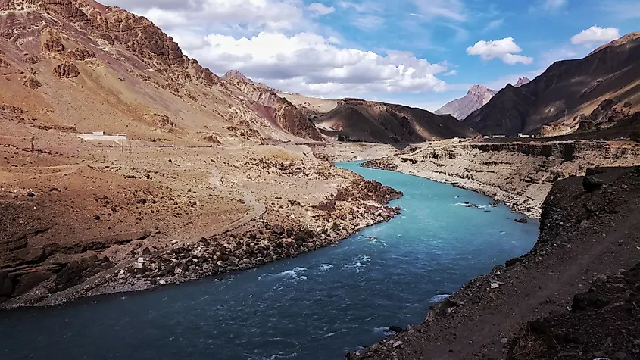
India’s water minister CR Patil has said the government is working on measures aimed at preventing water from flowing into Pakistan, further intensifying tensions over shared river resources following New Delhi’s suspension of the Indus Waters Treaty last year.
Speaking to Indian media, the minister said efforts are underway to ensure that river water originating in India does not reach Pakistan in the coming years, adding that the plan is being pursued under directives from the prime minister.
The remarks come after India’s decision in 2025 to suspend participation in the 1960 Indus Waters Treaty, a landmark agreement that governs the distribution of water from six rivers of the Indus basin between the two countries. Pakistan had strongly rejected the move, maintaining that the treaty remains legally binding and cannot be unilaterally terminated.
Pakistan has repeatedly warned that any attempt to alter or restrict the natural flow of shared rivers would be treated as a serious escalation, arguing that water cannot be used as a political tool. Officials in Islamabad have accused India of violating international commitments by attempting to reshape river usage unilaterally.
The dispute has gained momentum in recent months after India announced several projects involving infrastructure development on rivers flowing into Pakistan, including plans related to the Chenab River. New Delhi has also carried out operational changes at hydroelectric facilities, including sediment management work, after citing changes in treaty arrangements.
Analysts note that while India can regulate the timing of river flows through existing dams and infrastructure, its current systems do not have the capacity to fully block or permanently divert water at scale. Any large diversion projects would also require several years to complete.
Experts further warn that major alterations to river flows could significantly affect Pakistan’s agriculture-dependent economy, particularly in the Indus basin, though any practical impact would likely take years to materialize due to the scale of construction required.
Tensions over water sharing have remained a persistent issue between the two countries since the suspension of the treaty, with both sides increasingly hardening their positions over control and use of transboundary rivers.