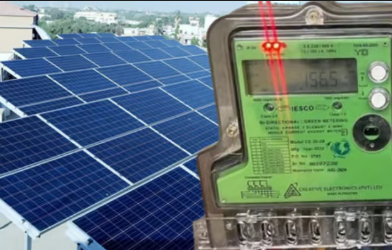
Pakistan’s solar power expansion has reached a scale that now closely matches the country’s entire utility electricity system, according to the Pakistan Electricity Review 2026.
The report estimates total distributed solar capacity at 38 GW by FY2024–25, which is roughly 93% of Pakistan’s installed utility-scale power capacity. It highlights a rapid shift in how electricity is being produced and consumed, with households, farms, and businesses increasingly installing solar systems on rooftops and private setups.
Distributed solar generation is estimated at 51 TWh in FY25, covering nearly 46% of total grid electricity sales of 111 TWh. The report says official statistics understate the scale of electricity use, as a large portion of solar generation occurs behind the meter or outside formal reporting systems.
At the same time, grid electricity sales fell from 125 TWh in FY22 to 111 TWh in FY25, indicating that rising electricity demand is increasingly being met outside the national grid rather than through it.
Net-metering capacity also expanded to 6.8 GW, while total solar deployment reached nearly 38 GW, much of it operating outside conventional utility accounting.
The report concludes that Pakistan’s electricity system is now effectively split into two parallel structures: a traditional grid-based system and a fast-growing consumer-driven solar network that is reshaping how power is generated and consumed across the country.