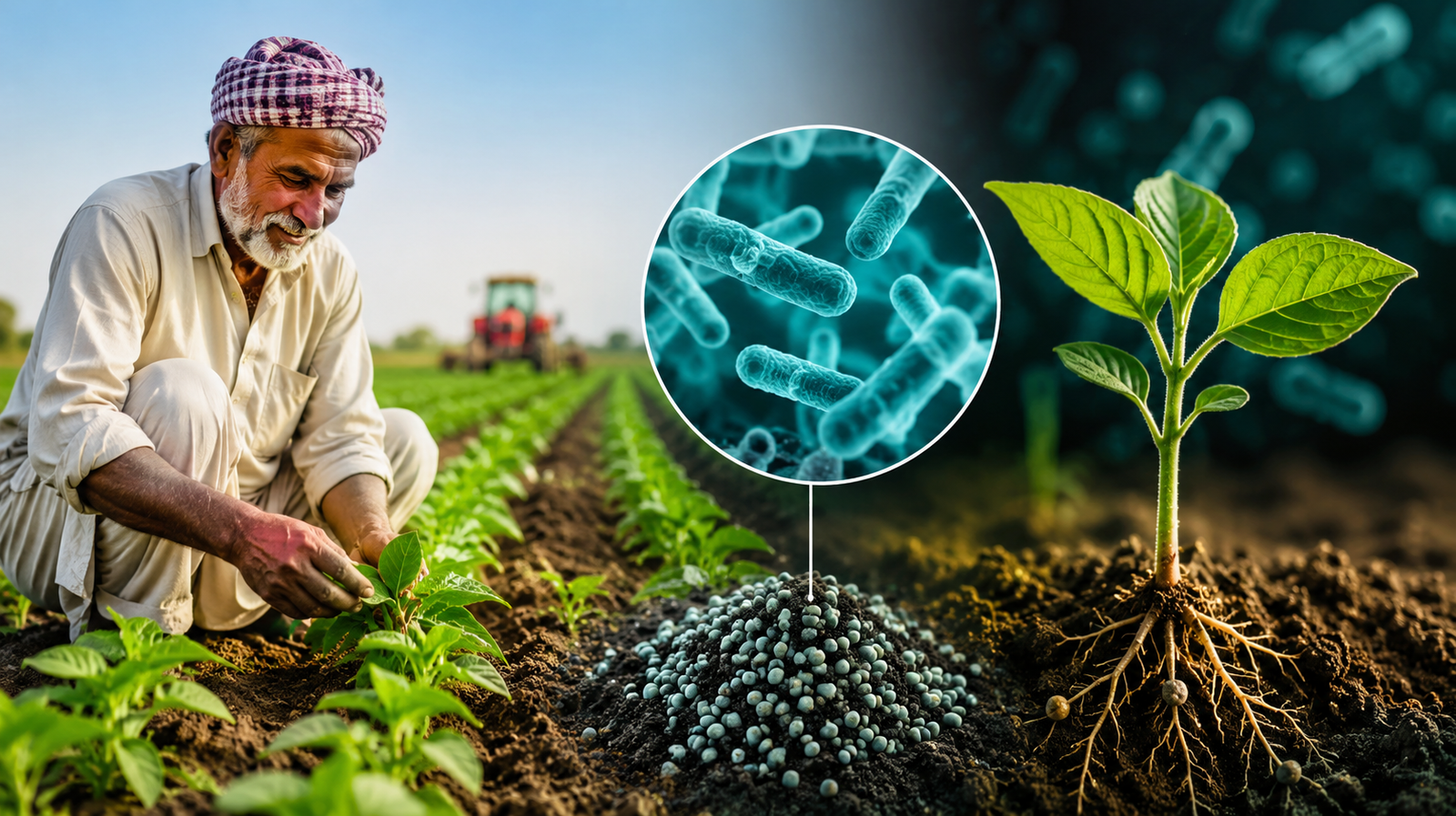
Pakistani farmers may soon gain access to a low-cost bacterial solution that can replace a significant portion of expensive chemical fertilizers, potentially improving crop productivity while cutting input costs.
The approach is based on research that earned Brazilian microbiologist Mariangela Hungria the World Food Prize for her decades-long work on beneficial soil bacteria. Her studies show that certain microbes can function as natural fertilizers by improving how plants access nutrients, especially nitrogen, which is essential for crop growth.
One key discovery involves rhizobia bacteria, which live inside soybean root nodules and convert atmospheric nitrogen into a usable form for plants. Another is Azospirillum, a soil bacterium that stimulates root development and enhances nutrient absorption in crops like maize, wheat, and pasture grasses.
Hungria’s research helped popularize microbial seed treatments in Brazil, where many crops are now planted using seeds coated with beneficial bacteria. This has allowed farmers to reduce dependence on synthetic fertilizers while maintaining strong yields and lowering production costs.
The system became widely adopted in Brazil due to long-term field testing, regulatory oversight, and consistent performance under local farming conditions. Over time, it has contributed to Brazil’s rise as a global agricultural leader, particularly in soybean production.
Agricultural scientists say similar microbial technologies could offer a cheaper and more sustainable option for other farming systems, including in regions facing rising fertilizer costs, though effectiveness depends on soil conditions and proper application.