



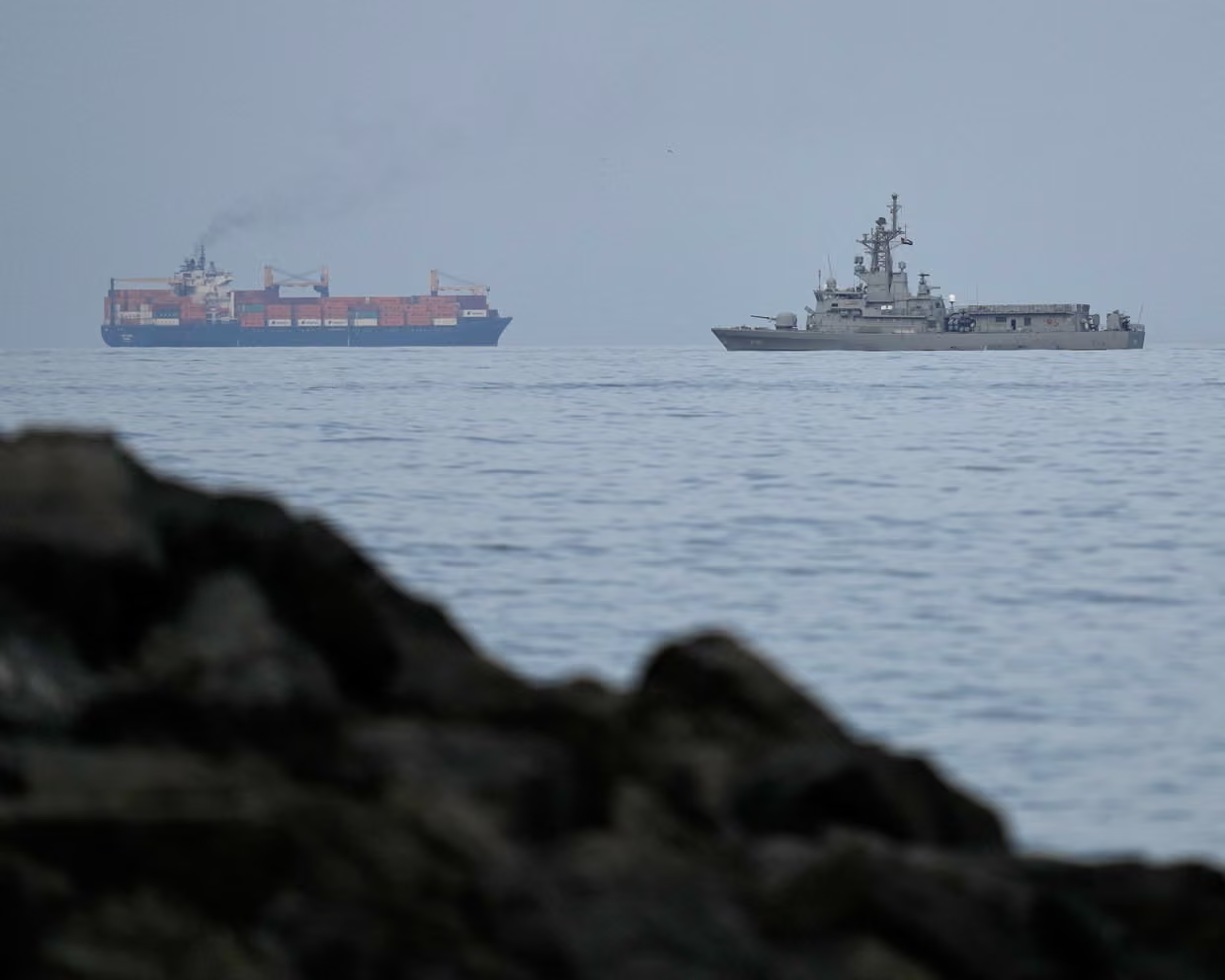
Donald Trump has announced that the United States Navy will begin blockading the Strait of Hormuz after recent talks between the United States and Iran failed to produce an agreement to end weeks of fighting in the region.
The Strait of Hormuz is one of the world’s most important oil routes, with about 20% of global energy supplies passing through it. Any disruption there can affect fuel prices worldwide, including in countries like Pakistan.
US warns ships against paying Iran “tolls”
In a social media post, Trump said the United States would take action against ships that pay what he described as “illegal tolls” to Iran to pass through the strait. He also claimed US forces would start removing sea mines that Iran allegedly placed in the waterway.
He warned that any attack by Iranian forces on US ships or commercial vessels would bring a strong military response.
Iran warns of retaliation
Iran’s powerful military force, the Islamic Revolutionary Guard Corps, responded by saying that any foreign military movement near the strait could be treated as a violation of the fragile ceasefire and would be answered “harshly and decisively.”
Iranian Parliament Speaker Mohammad Bagher Ghalibaf also rejected Trump’s threats, saying Iran would respond strongly if attacked but remained open to talks based on fairness and international law.
Talks in Islamabad fail to reach an agreement
The latest round of negotiations between the United States and Iran took place in Islamabad — the first direct high-level talks between the two countries in more than a decade.
US Vice President JD Vance said the discussions did not produce a deal. According to US officials, the main disagreements included:
Iran’s nuclear program
- Control of uranium enrichment facilities
- Iran’s support for regional armed groups
- Reopening shipping routes through the Strait of Hormuz
Despite the failure to reach an agreement, Trump said he still believes Iran may continue negotiations.
Conflict already affecting global economy
The fighting between the US and Iran — along with Israeli military actions against Iran-backed groups — has already lasted six weeks, causing thousands of deaths and pushing global oil prices higher.
Shipping through the Strait of Hormuz had slowed significantly during the conflict, though a few oil tankers began passing through again after a temporary ceasefire earlier this month.
Meanwhile, tensions remain high in Lebanon, where Israel says it is continuing strikes against the armed group Hezbollah, warning that this front of the conflict is separate from the US-Iran ceasefire.
With negotiations still unresolved and military warnings increasing, the situation around the Strait of Hormuz remains fragile and could have wider effects on global energy markets and regional stability