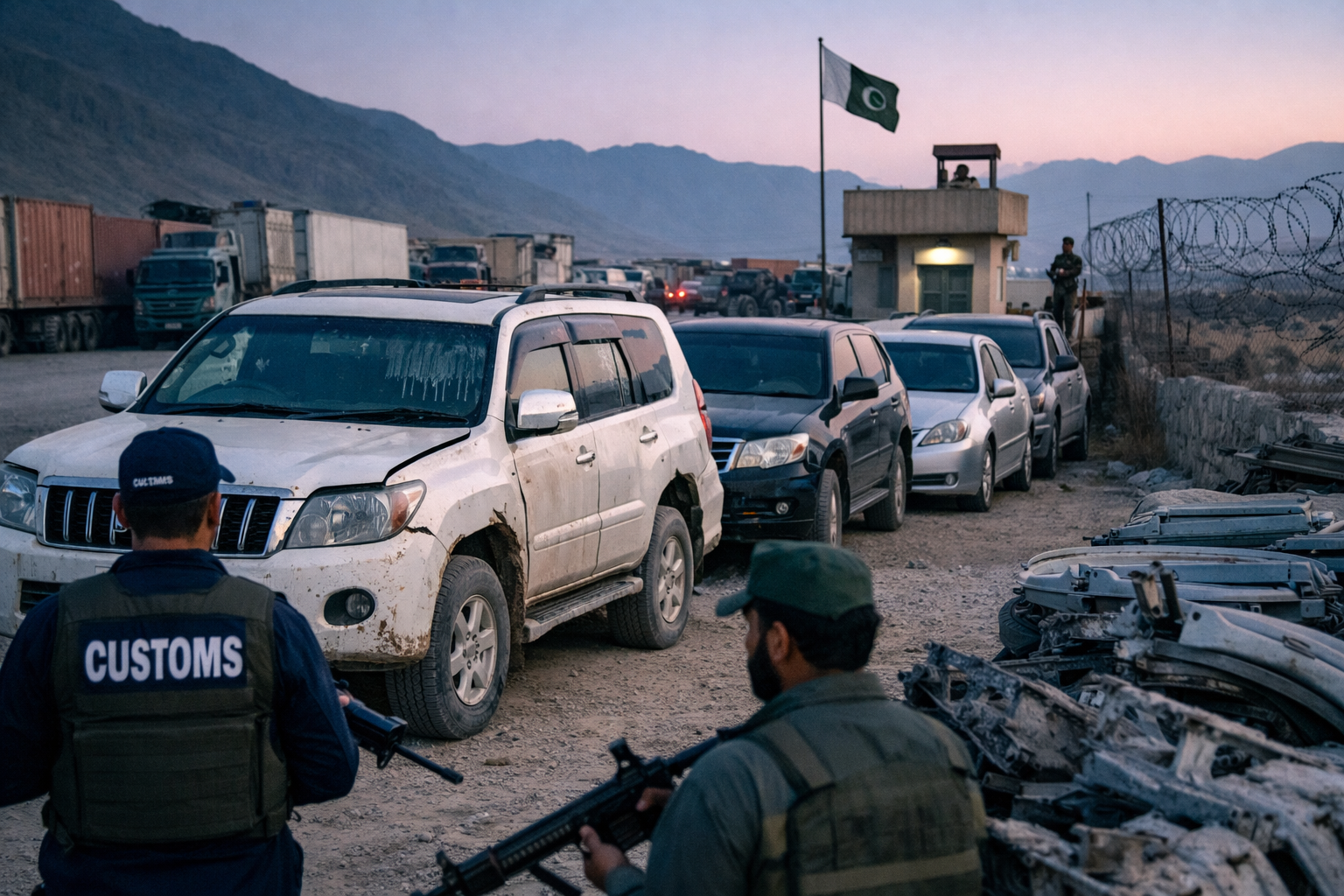
The Federal Board of Revenue (FBR) has approved a new policy allowing confiscated and tampered vehicles above 1800cc to be used for official operational purposes by its Anti-Smuggling and Enforcement formations, starting April 2026.
Under Customs General Order (CGO) 4 of 2026, issued by the FBR, such high-capacity vehicles may be allocated for use in hard-area and border enforcement formations operating under Chief Collectors of Customs in Balochistan and Khyber Pakhtunkhwa. These include key locations such as Gwadar, Chaman, Taftan, Dalbandin, Panjgur, Sost, Torkham, Angoor Ada, and other designated border and transit trade stations.
The move is part of a broader regulatory framework aimed at managing confiscated vehicles with tampered or cut-and-weld chassis numbers. The FBR said the objective is to ensure transparent disposal, uniform procedures, and structured utilization of seized assets, effective from 1st April 2026.
Under the new system, only government and semi-government departments, along with state-run educational, medical, and scientific institutions, will be eligible to acquire such vehicles. The FBR has clearly stated that these vehicles will not be sold to private individuals under any circumstances.
Priority allocation will be given to Customs Wing formations for operational use under relevant provisions of the Customs Act, 1969. Departments will be required to justify their vehicle requirements based on operational needs, workforce strength, and field responsibilities. These proposals will be reviewed and approved by a committee headed by the Member (Customs Operations).
The policy also introduces a quarterly review mechanism, requiring formations to reassess and update their vehicle requirements. Replacement allocations will be permitted where vehicles become unserviceable or are withdrawn from use.
To improve accountability, the Customs Wing will establish a digitized tracking system for all confiscated tampered vehicles. Each vehicle will be recorded with complete details, including forensic chassis verification, photographs, condition reports, and legal status. The Cabinet Division will also be granted access to this database.
At the end of their usable life, these vehicles may be dismantled following departmental recommendations, with custody reverting to Pakistan Customs. In cases where vehicles cannot be disposed of through official allocation, they may be transferred free of cost to government-run educational, medical, and scientific institutions upon approval from relevant ministries.
Buses, coasters, vans, and similar vehicles that remain unsold through the standard process may also be redistributed to public institutions under the same framework.
Any confiscated vehicle that remains undisposed of for five years after becoming available will ultimately be dismantled according to government-approved procedures.