




The federal government has introduced a temporary policy relaxation aimed at facilitating exports to Iran, the Central Asian Republics, and Azerbaijan through Iran’s land corridor, in an effort to support exporters facing ongoing regional transit challenges.
According to a notification issued by the Ministry of Commerce, the exemption — approved by the Federal Minister for Commerce — temporarily relaxes requirements related to financial instruments under Para 3 of the Export Policy Order 2022. Normally, exporters are required to comply with foreign exchange regulations notified by the State Bank of Pakistan under the Import and Export Control Act, 1950.
The relaxation will remain in force for three months, from March 24, 2026, to June 21, 2026.
Under the revised arrangement, Pakistani exporters will be permitted to ship rice to Central Asian markets and Azerbaijan through Iran’s land route. The policy also allows exports of multiple commodities to Iran, including milled rice, seafood, potatoes, meat, onions, maize, citrus fruits, bananas, tomatoes, frozen chicken, pharmaceuticals, and tents.
Authorities have made the exemption conditional upon exporters submitting an undertaking confirming that export proceeds will be repatriated within the specified timeframe.
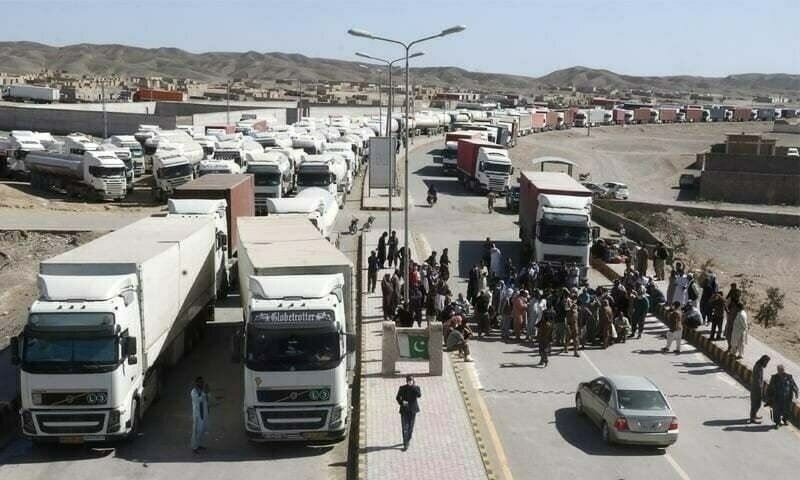
The decision comes as Pakistan continues to face disruptions along its traditional overland trade route to Central Asia through Afghanistan. Extended border closures and transit restrictions have significantly affected trade volumes, forcing policymakers to explore alternative export corridors.
Official trade data shows a sharp contraction in commerce with Afghanistan during the first eight months of FY2025-26. Exports dropped to nearly $219 million during July–December 2025, representing a decline of more than 56 percent compared to the same period last year. Trade with Central Asian countries has also remained limited, reaching approximately $109 million during the same period due to transit bottlenecks.
Officials say the temporary relaxation is designed to maintain export momentum — particularly for perishable goods — while providing exporters access to regional markets through alternative logistics routes.
However, exporters have reportedly encountered practical difficulties, as several commercial banks, including Askari Bank, Soneri Bank, and HBL, have yet to facilitate transactions, citing the absence of formal operational instructions from regulators.