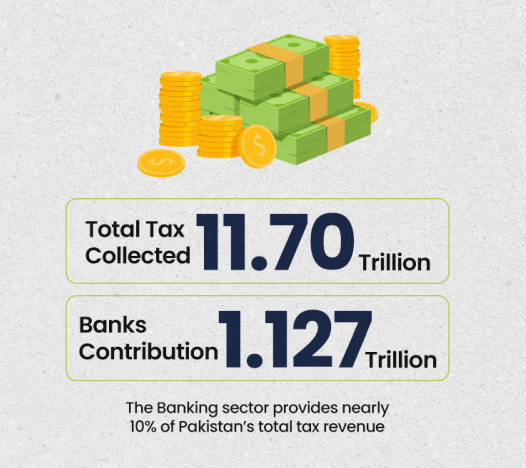
Pakistan’s banking industry has become the government’s largest source of tax revenue due to persistently high taxation, analysts say. While this has provided short-term support to public finances, the growing tax burden is increasingly seen as a drag on the sector’s long-term expansion and competitiveness, according to the Pakistan Bank Association (PBA).
The association cautioned that steep corporate taxes are squeezing bank profits, dampening foreign investor interest, and restricting the flow of credit to the private sector. Tight margins have also slowed momentum in financial inclusion and the rollout of digital banking, even as wider access to formal financial services remains vital for economic growth.
Market observers believe that easing the tax load over time could unlock fresh growth opportunities for banks. They argue that lower taxes would strengthen profitability, attract overseas capital, and enable banks to step up lending to businesses and consumers.
PBA said more balanced and predictable tax structure could help build a resilient, inclusive, and technology-led banking system, while still delivering stable revenue for the government in the medium term.