



The closure of the Strait of Hormuz amid escalating tensions involving Iran has severely disrupted India’s liquefied petroleum gas (LPG) supply, exposing the country’s heavy reliance on Gulf imports.
Industry data shows that around 90% of India’s LPG imports transit through the Hormuz route. With domestic production meeting only about 40% of total demand, the supply shock has quickly translated into market stress.
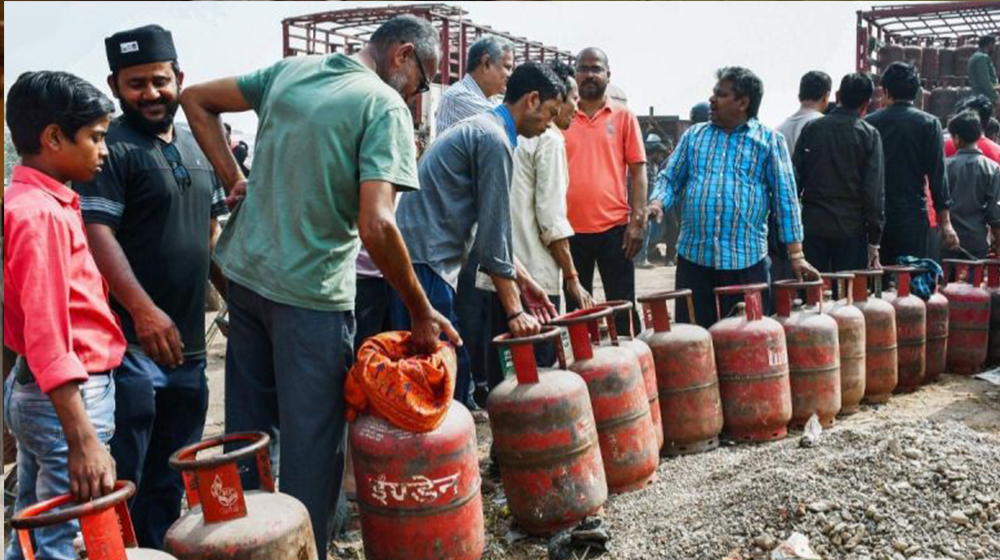
Early signs of strain are emerging, including increased consumer buying and concerns over potential rationing if the disruption persists. The situation is particularly critical given LPG’s central role in household energy use.
The expansion of access under the Pradhan Mantri Ujjwala Yojana has significantly boosted consumption over the past decade, making LPG the primary cooking fuel for nearly 60% of households. As a result, any prolonged supply interruption risks widespread impact on daily life.
Demand has continued to rise, with February 2026 consumption reaching about 2.8 million tonnes—up roughly 10% year-on-year and marking a record high.
Although alternative supplies from countries such as the United States, Russia, and Norway are being considered, higher costs and logistical constraints are expected to limit their ability to quickly offset the shortfall.
Analysts warn that the disruption underscores India’s structural vulnerability to supply shocks in key global transit routes, particularly for essential fuels like LPG.